Foundations of Adventure Safety
May 1-2, 2026 – Guangzhou, China
Foundations of Adventure Safety
Two-day in-person training for managers of outdoor, travel and experiential programs
The course content includes good safety practices, standards and theories to help programs achieve excellence in risk management.
Participants develop skills and knowledge essential to building and maintaining an effective safety management system for their outdoor, adventure, experiential or travel program.
This 16-hour training is held over two days from 8:30 am to 5:30 each day, with a one-hour lunch break.
The class features case studies, role-playing scenarios and seminar-style discussions. Lunch and afternoon snacks will be provided each day.
Graduates receive a certificate good for three years.
The course is presented by CNH and Utahloy International School Guangzhou.
Course Overview
Dates
May 1 –
May 2
Course Length
2 days
Location
Utahloy International School Guangzhou
Course host
CNH
Registration deadline
April 30
Cost
415 USD / 2900 RMB
Language
English
Certification
Foundations of Adventure Safety
Registration Handled By
Utahloy International School Guangzhou and CNH
CEUs
available from CSU Pueblo and ACCT International
Syllabus
Download SyllabusDay 1
Getting Started
General Concepts
Risk Domains
Day 2
Risk Management Instruments
Synthesis & Conclusion
Instructor

Jeff Baierlein
Jeff A. Baierlein (he/him) has been working professionally since 1987 with outdoor education, environmental education, adventure education and experiential education organizations in the USA and around the world. He led remote wilderness expeditions, worked as a naturalist-educator, served as an Emergency Medical Technician with ambulance services, led search and rescue missions, and was appointed to the Washington State Governor’s Council on Environmental Education.
Prior to founding Viristar, Jeff served as Executive Director of both the Boojum Institute for Experiential Education and the Baltimore Chesapeake Bay Outward Bound Center. His writing and lectures have been translated into Japanese, Vietnamese, Russian, Marathi, and Chinese.
Textbook
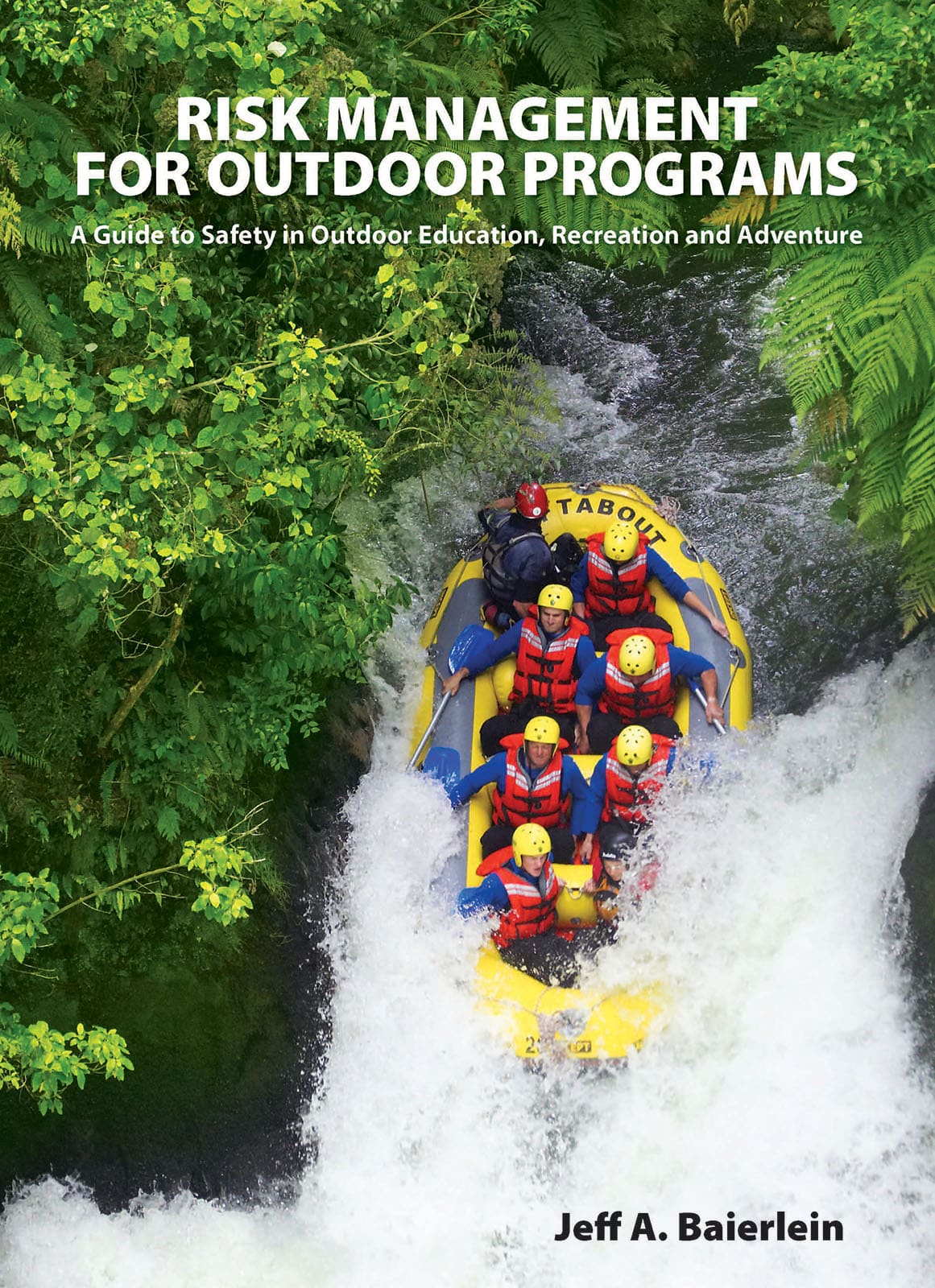
Participants receive a paperback copy of the course textbook, “Risk Management for Outdoor Programs: A Guide to Safety in Outdoor Education, Recreation and Adventure.”
This acclaimed 218-page textbook provides detailed descriptions of good safety practices, along with background information, case studies, and numerous example forms and document templates.
FAQ
Participants in the Foundations of Adventure Safety training must be available for the full 16 hours of the course, and, independently or with assistance, be able to read, write and speak in the language of instruction (normally English), work constructively with others, perform necessary self-care, and manage personal mobility.
If a participant needs to withdraw from a course in which they are enrolled, they should contact the Course Host for rescheduling and refund policies. Viristar does not offer Foundations of Adventure Safety course refunds.
It’s not necessary to be working for an outdoor, adventure or experiential program in order to enroll in and learn from the training. Part of the course involves participants evaluating risk management practices at an organization with which they are directly familiar. Therefore, it is helpful if you are working for (in a paid or volunteer capacity) or have recently worked for an outdoor, adventure-based or experiential learning organization, but this is not required.
Yes. The course curriculum is designed to be applicable to outdoor, adventure, travel, and experience-based programs anywhere in the world. The principles of incident causation and prevention taught in the course, and the standards of good practice covered, are relevant everywhere. Participants are provided resources to identify locally-relevant legal, insurance, activity-specific, and other resources specific to their circumstance.
Yes. Viristar’s Foundations of Adventure Safety course is recognized by adventure, outdoor and experiential education professionals and organizations around the world as a valuable learning experience. The adventure safety training sector is generally not regulated by government bodies; consequently, no formal accreditations by government authorities are known to exist for trainings such as Viristar’s Foundations of Adventure Safety course.
The Foundations of Adventure Safety course is 16 hours and takes place in person in a classroom setting. The Risk Management for Outdoor Programs training is 40 hours (over four weeks) and takes place online. The core curriculum of the two courses is similar, but due to the additional hours, the 40-hour course covers more content and in more detail.
Syllabus
Download SyllabusDay 1
Getting Started
General Concepts
Risk Domains
Day 2
Risk Management Instruments
Synthesis & Conclusion
Instructor
Jeff Baierlein
Jeff A. Baierlein (he/him) has been working professionally since 1987 with outdoor education, environmental education, adventure education and experiential education organizations in the USA and around the world. He led remote wilderness expeditions, worked as a naturalist-educator, served as an Emergency Medical Technician with ambulance services, led search and rescue missions, and was appointed to the Washington State Governor’s Council on Environmental Education.
Prior to founding Viristar, Jeff served as Executive Director of both the Boojum Institute for Experiential Education and the Baltimore Chesapeake Bay Outward Bound Center. His writing and lectures have been translated into Japanese, Vietnamese, Russian, Marathi, and Chinese.
Textbook
Participants receive a paperback copy of the course textbook, “Risk Management for Outdoor Programs: A Guide to Safety in Outdoor Education, Recreation and Adventure.”
This acclaimed 218-page textbook provides detailed descriptions of good safety practices, along with background information, case studies, and numerous example forms and document templates.
FAQ
Participants in the Foundations of Adventure Safety training must be available for the full 16 hours of the course, and, independently or with assistance, be able to read, write and speak in the language of instruction (normally English), work constructively with others, perform necessary self-care, and manage personal mobility.
If a participant needs to withdraw from a course in which they are enrolled, they should contact the Course Host for rescheduling and refund policies. Viristar does not offer Foundations of Adventure Safety course refunds.
It’s not necessary to be working for an outdoor, adventure or experiential program in order to enroll in and learn from the training. Part of the course involves participants evaluating risk management practices at an organization with which they are directly familiar. Therefore, it is helpful if you are working for (in a paid or volunteer capacity) or have recently worked for an outdoor, adventure-based or experiential learning organization, but this is not required.
Yes. The course curriculum is designed to be applicable to outdoor, adventure, travel, and experience-based programs anywhere in the world. The principles of incident causation and prevention taught in the course, and the standards of good practice covered, are relevant everywhere. Participants are provided resources to identify locally-relevant legal, insurance, activity-specific, and other resources specific to their circumstance.
Yes. Viristar’s Foundations of Adventure Safety course is recognized by adventure, outdoor and experiential education professionals and organizations around the world as a valuable learning experience. The adventure safety training sector is generally not regulated by government bodies; consequently, no formal accreditations by government authorities are known to exist for trainings such as Viristar’s Foundations of Adventure Safety course.
The Foundations of Adventure Safety course is 16 hours and takes place in person in a classroom setting. The Risk Management for Outdoor Programs training is 40 hours (over four weeks) and takes place online. The core curriculum of the two courses is similar, but due to the additional hours, the 40-hour course covers more content and in more detail.