Note: This is not legal advice. Consult a qualified attorney licensed or otherwise permitted to practice law in your location, and who is knowledgeable about your activities and areas of operations.
Annie Miller has warm, sparkling eyes, and an easy smile. She has an adventurous spirit, and is a talented artist with a love for singing and dancing.
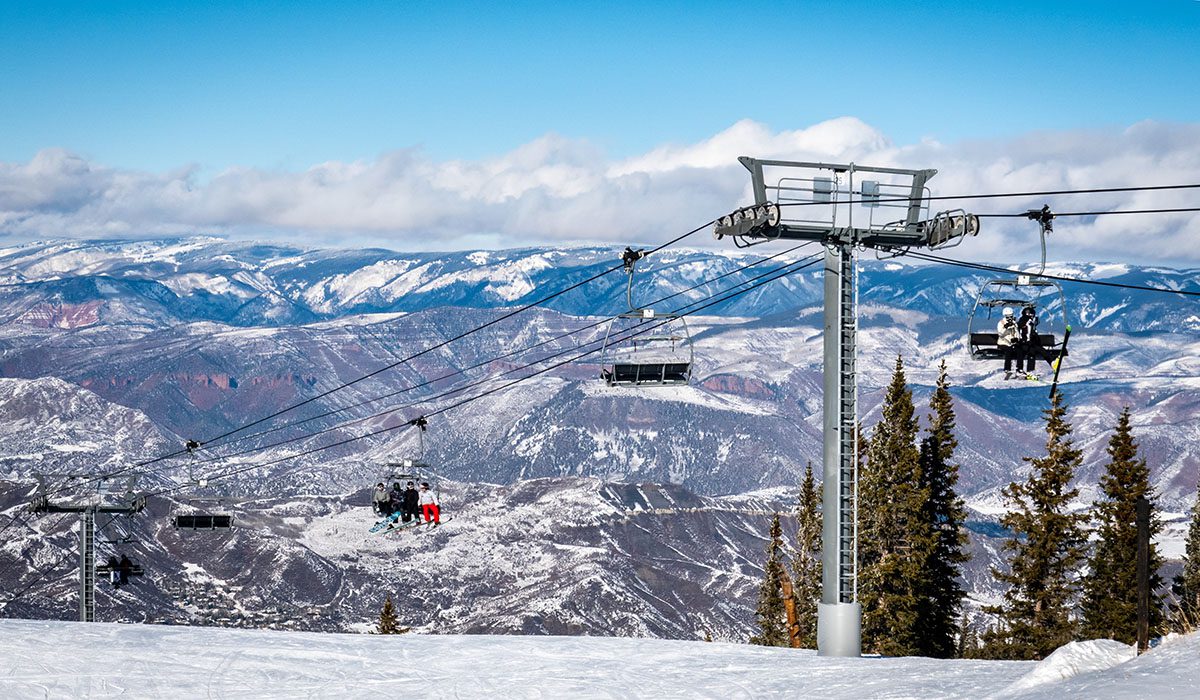
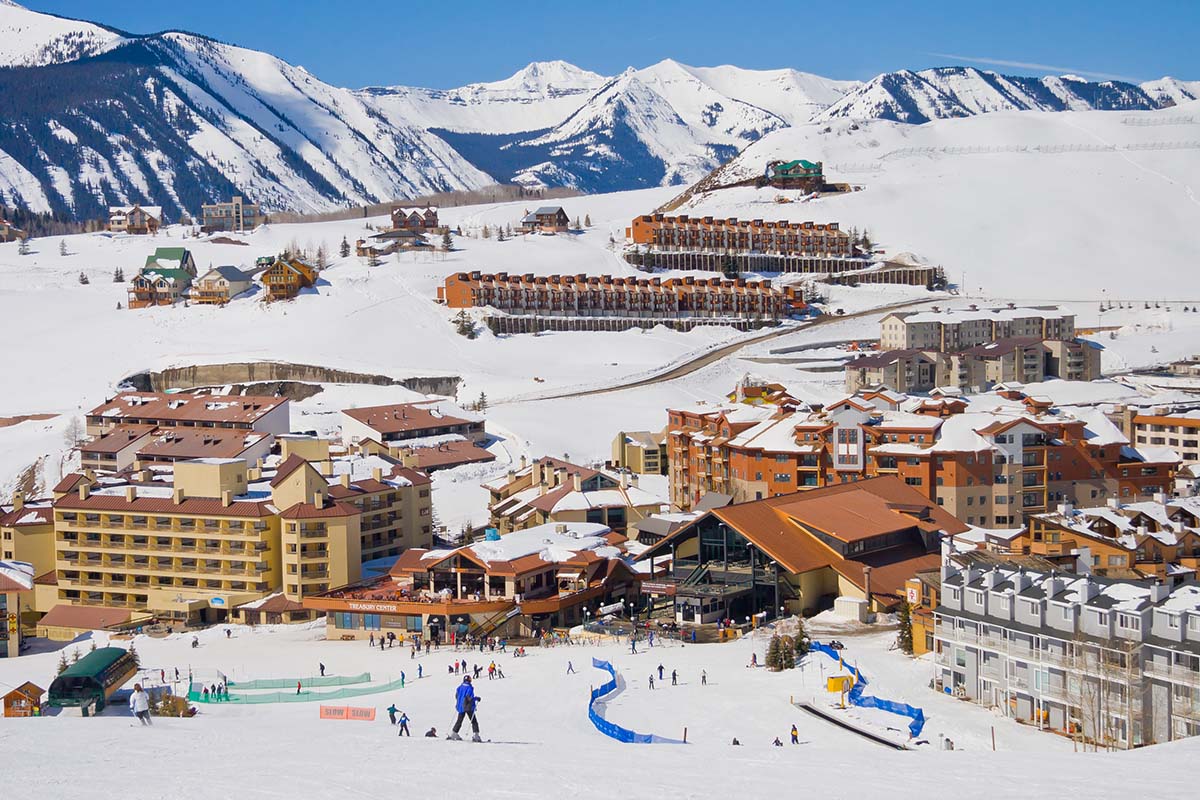
In March 2022, 16-year-old Annie and her father took a skiing trip to Crested Butte Mountain Resort in Colorado, USA. She and her father boarded a chair lift. Annie attempted to get seated, but was unable to do so.
As the chair rose into the air, accelerating to full speed, Annie was left hanging from the chair. Her father and bystanders yelled for a lift operator to stop the chair, but the chair kept moving.
Annie’s father tried to hold on to his daughter, and continued to scream for someone to stop the lift. But the chair continued to move up the mountain—and, Annie’s father said, no lift attendant took any action to stop or even slow down the lift.
Annie fell from the chair approximately nine meters (30 feet), landing directly on her back onto hard-packed snow. She went into acute neurogenic shock and acute hypoxemic respiratory failure.
She had no sensation or motor control below her nipple line. She suffered multiple severe spine fractures, damaged her spinal cord, bruised her lungs, and lacerated her liver.
She was rushed to the hospital, where she was put on a ventilator, and remained in the Intensive Care Unit for about a month.
Annie’s Injuries
Annie’s family said that “Over the next month, Annie suffered acute respiratory failure, hypoxia, hypercapnia, pneumonia, constipation, nausea, vomiting, neuromuscular failure, and unbearable pain. With that, Annie underwent a tracheostomy and g-tube placement.”
Her family noted that at discharge, Annie’s diagnoses included:
- Acute incomplete tetraplegia
- Acute spastic tetraplegia
- History of fusion of cervical spine
- Normocytic anemia
- Hypercalcemia due to immobilization
- Detrusor overactivity
- Hyperphosphatemia
- Hypovitaminosis D
- Neurogenic bowel
- Neurogenic bladder
- Impaired sensation
- Respiratory failure, acute
- Tracheostomy present
- Neurogenic orthostatic hypotension
- At high risk for autonomic dysreflexia
- DVT prophylaxis
- Fracture of right acetabulum
- Dysphagia
A statement issued by representatives for Annie’s family said, “Annie Miller has suffered significant and permanent injury and dysfunction, physical impairment and disfigurement, emotional distress, mental anguish, and physical suffering. Annie Miller’s injuries have been and will continue to be disabling, incapacitating, and humiliating. Annie Miller’s injuries are permanent… Annie Miller has suffered and will suffer a loss of the ability to enjoy a normal life.”
Annie is now a quadriplegic, paralyzed from the chest down, and will not walk again.
Lawsuit Filed—But Waiver an Obstacle
Annie’s family sued the ski resort and its owner, Vail Resorts, for negligence, in its alleged failure to stop the chairlift when Annie did not load properly onto the lift.
The lawsuit, filed nine months after the incident, claimed that by not stopping the lift “when it was obvious to everyone present that Annie was not seated properly,” the operator of the chairlift “consciously and recklessly disregarded Annie’s safety, knowing that not stopping the lift could result in a fall that could be calamitous to Annie resulting in serious permanent injury…”
But the liability waiver included in the ski area pass that the Miller family purchased barred them from suing from negligence.
The agreement waived “any and all claims” against Vail Resorts (which has a history of safety incidents), and included an agreement to “hold harmless, release, indemnify and agree to not to sue” the company.
Supreme Court Invalidates Waiver in Certain Cases
For years, courts had ruled again and again that liability waivers protect ski areas in Colorado from lawsuits initiated by injured skiers.
For example, in 2018, a court dismissed a lawsuit from a woman injured in a chairlift accident at Loveland Ski Area, ruling the waiver she signed eliminated her right to sue the ski area.
And in 2023, a court dismissed claims against Vail Resorts—alleging negligence and reckless endangerment, after a ski area visitor was hit and injured by a snowmobile driven by a ski area employee—on the basis that the injured person had signed a liability waiver.
But in a landmark decision, the Colorado Supreme Court in May 2024 ruled that release agreements do not protect ski resorts from all negligence claims.
The court said that a release agreement may not be used to eliminate liability for violations of a law or regulation.
In the words of the court, “a party cannot discharge its obligation to perform a statutory duty by way of an exculpatory agreement.”
Liability for a harm caused by such a violation can be established by a claim of “negligence per se.” Negligence per se occurs when a defendant violates a statute adopted for the public’s safety, and the violation proximately causes a plaintiff’s injury.
The Release of Liability
Annie’s father, Mike Miller, electronically signed a “Release of Liability, Waiver of Claims, Assumption of Risks and Indemnity Agreement” on Annie’s behalf, which said, in part:
I understand that participating in…skiing,…and using the lifts,… and the premises in general, for any purpose (the Activity), can be HAZARDOUS AND INVOLVE THE RISK OF PHYSICAL INJURY AND/OR DEATH.
I expressly acknowledge and assume all additional risks and dangers that may result in property damage, physical injury and/or death, which may be above and beyond the inherent dangers and risks of the Activity, including but not limited to:… the negligence or failure of Participant, Ski Area employees, or other guests to act safely…; misloading, entanglements, or falls from ski lifts….
I AGREE, to the greatest extent permitted by law, TO WAIVE ANY AND ALL CLAIMS AGAINST AND TO HOLD HARMLESS, RELEASE, INDEMNIFY, AND AGREE NOT TO SUE Vail Resorts, Inc.,…FOR ANY INJURY, INCLUDING DEATH, LOSS, PROPERTY DAMAGE OR EXPENSE, WHICH I OR PARTICIPANT MAY SUFFER, ARISING IN WHOLE OR IN PART OUT OF PARTICIPANTS [sic] PARTICIPATION IN THE ACTIVITY, INCLUDING, BUT NOT LIMITED TO, THOSE CLAIMS BASED ON ANY RELEASED PARTYS [sic] ALLEGED OR ACTUAL NEGLIGENCE OR BREACH OF ANY EXPRESS OR IMPLIED WARRANTY OR BREACH OF ANY STATUTORY OR OTHER DUTY OF CARE…. I UNDERSTAND THAT NEGLIGENCE
INCLUDES FAILURE ON THE PART OF ANY RELEASED PARTY TO TAKE REASONABLE STEPS TO SAFEGUARD OR PROTECT ME FROM THE RISKS, DANGERS AND HAZARDS OF THE ACTIVITY.
This would appear to prohibit a suit based on a claim of negligence, and explicitly includes “falls from ski lifts.”
The Law, and the ANSI Standard
However: Colorado’s Ski Safety Act of 1979, the Passenger Tramway Safety Act (PTSA), and regulations established under those laws, provide a legal framework for ski area safety requirements in Colorado.
The Passenger Tramway Safety Board, empowered by the PTSA with rulemaking authority, incorporated into its rules ANSI standard B77.1, which addresses safety criteria for “Passenger Ropeways – Aerial Tramways, Aerial Lifts, Surface Lifts, Tows and Conveyors.” This includes ski area chair lifts.
The court noted that the ANSI standard requires lift attendants:
to monitor the passengers’ use of the aerial lift; including observing, advising and assisting them while they are in the attendant’s work area as they embark on or disembark from the aerial lift; and to respond to unusual occurrences or conditions, as noted. The attendant should respond by choosing an appropriate action, which may include any of the following:
1) assisting the passenger;
2) slowing the aerial lift (if applicable);
3) stopping the aerial lift;
4) continuing operation and observation.
Because the negligence asserted in the lawsuit may have related to failure to follow the specifications described in ANSI B77.1, which was incorporated into the regulatory structure in Colorado, the state’s Supreme Court instructed a lower court—which had earlier considered, then dismissed, Miller family claims, citing the release agreement—to reinstate the negligence per se claim.
The $12.4 Million Verdict: Negligent
In September 2025, the lower court ruled on the claim. The jury found Vail Resorts violated the ANSI standard. The jury found Vail Resorts negligent, and awarded the Miller family USD 12.4 million.
The award included approximately USD 500,000 for noneconomic losses, about USD 4 million for physical impairment, and close to USD 8 million for future economic losses.
The Colorado Trial Lawyers Association said, “Public policy of our state demands that ski area operators be held accountable for the injuries caused by the dangers they create.”
Annie said she hopes the outcome of the case helps improve ski safety.
Liability Waivers: A Big Picture View
The invalidation of Vail Resorts’ waiver turned on a relatively fine point of law in the state of Colorado. Let’s look at the broader picture of liability waivers and their validity.
Well-constructed and appropriately-used release agreements are typically effective in efforts to dismiss lawsuits alleging ordinary negligence, in jurisdictions where the law allows waivers to be used for that purpose.
However, whether or not a liability waiver is effective depends on a number of factors.
In the case brought by Annie Miller’s family, the waiver was invalidated as the court identified the lawsuit as claiming a breach of a legally required safety rule, and found that—at least in Colorado, and at least for now—liability waivers don’t permit companies to violate legally enforceable laws, rules and regulations.
Liability waivers may be found invalid for a number of other reasons as well.
Plaintiffs’ attorneys may attempt a variety of approaches to invalidate waivers.
Defendants’ attorneys may, in turn, forward a number of reasons why a disputed waiver should be upheld.
Laws and regulations vary by jurisdiction. Any given organization may simultaneously exist in multiple jurisdictions (such as a city, a province or state, and a country), each with different legal requirements.
Those laws and regulations may be interpreted in various ways by the courts. And laws and regulations are ever-changing, depending on the actions of legislatures, regulatory authorities, and judicial bodies creating case law.
Operators must also pay attention to the legal context of both the jurisdiction(s) in which their company is based and the jurisdiction(s) in which their activities are provided.
Because of this complexity, only a qualified attorney can give reliable advice regarding how to develop and use a legally enforceable liability waiver suitable for an organization’s specific circumstances, or—on the other hand—what approaches might be tried to invalidate someone else’s waiver.
Considerations an attorney might remark upon could include, among potentially many others:
- The enforceability of a waiver against different types of negligence. Each legal jurisdiction may define and treat negligence differently, but commonly, a liability release may lead to dismissal of a claim alleging ordinary negligence, but would not be effective in the case of gross negligence.
- A typical definition of negligence is the failure to behave with the level of care that a reasonable person would have exercised under the same circumstances.
- A typical definition of gross negligence is a lack of care that demonstrates reckless disregard for the safety or lives of others, which is so great it appears to be a conscious violation of other people’s rights to safety; it is willful, wanton, and reckless conduct more harmful than ordinary negligence.
- Who signed the waiver (for example, a minor, or their guardian/parent), and their competence to sign
- Whether or not the waiver used clear and unambiguous language
- If the waiver might be found to violate public policy
- If coercion or duress were involved in signing the waiver
- Whether the waiver includes the activities in question, and clearly outlines the risks involved
Waiver Law Is Subject to Change
The Supreme Court decision and jury finding in Annie Miller’s case was warmly welcomed by some.
Bruce Braley, a partner in the law firm that represented the Miller family, applauded the ruling, and dismissed the possibility of any burden it might impose on ski areas. “There can be no chilling effect to expect a ski resort to comply with safety standards required by the Colorado Passenger Tramway Safety Board,” he said. “This is a victory for ski safety in Colorado.”
The Colorado Trial Lawyers Association also supported the decision, saying that “you cannot contract away your statutory duty when it comes to safety.” A representative of the group said, “If we start to allow companies to contract those standards away, we will see more cases like Annie’s.”
However, not everyone was happy with the verdict.
The Colorado Camps Network and the Colorado River Outfitters Association were among those that argued that liability releases provide important protection for outdoor recreation businesses, helping keep insurance affordable—or available at all—and helping keep prices reasonable.
The Colorado ski industry warned that weakening the liability waiver could “eliminate altogether the availability of many recreational options for children.”
In December 2025, America Outdoors, a trade association for the outfitting and outdoor recreation industry, said, “In states where liability waivers are unenforceable or face significant legal uncertainty, the consequences are real and measurable. Small businesses—outfitters, guides, nonprofit ski areas, climbing gyms, event organizers—face unsustainable litigation costs even when they’ve done nothing wrong. Access to outdoor recreation becomes more expensive or disappears entirely as providers can’t afford to operate. And the businesses affected aren’t corporate entities—they’re small operations, often one-person companies, trying to help people get outside.”
Legislatures have repeatedly changed laws to adjust the effectiveness of liability releases after court rulings provoked concern.
In Utah, known for skiing and other outdoor recreation activities, legislators strengthened the effectiveness of liability waivers after the state’s Supreme Court took a close look at waiver validity.
Colorado’s business-friendly legislature may similarly once again strengthen the effectiveness of its liability waivers. Attorneys in Colorado expect lawmakers may consider new legislation in the next year or so.
This illustrates how thoughtful legislators, regulators and members of the judiciary engage, on an ongoing basis, in a continual effort to balance and re-balance the needs and interests of the outdoor and adventure industry with the needs and interests of participants in commercial outdoor and adventure activities—and how adjustments to the law and regulation around release agreements can be used to support that balancing act.
Terminology
A variety of terms are used to describe documents that seek to perform functions such as establishing that a prospective participant:
- Acknowledges the risks arising from an activity
- Assumes those risks
- Releases the activity provider from liability
- Indemnifies the activity provider
Vail Resorts used the term “Release of Liability, Waiver of Claims, Assumption of Risks and Indemnity Agreement.”
The Colorado Supreme Court, in its opinion, referenced that document and related documents using terms including:
- private release agreement
- release agreement
- release of liability, liability release
- Release of Liability & Assumption of Risks Agreement
- exculpatory agreement
- waiver of liability, liability waiver
- waiver
Other organizations may use any of a variety of other terms. Some may consider “liability waiver” to be a misnomer, if a document with that name serves functions other than voluntarily giving up (waiving) the legal right to sue. It may be ideal if the full title of the document accurately summarizes the document’s principal purposes. Discussion is ongoing amongst legal specialists and others regarding which terms are appropriate for which circumstances.
A qualified attorney can advise as to how an organization might entitle and refer to documents addressing acknowledgement and assumption of risk, release of liability, indemnification/hold harmless and any other pertinent risk transfer matters, specific to the organization’s particular location, activities, business processes and other circumstances.
Other Failed Waiver Defenses
Oregon, Snowboarding
In 2014, as part of a lawsuit following an incident where a snowboarder became permanently paralyzed after going over a jump at a ski area, the Oregon Supreme Court ruled that businesses may be sued for negligence, even when someone engaging in sports or recreation has signed a waiver.
The court found that the waiver was an “unconscionable contract,” and ruled that “the release is unenforceable.”
Major lawsuits followed, including a more than USD 11 million jury award for an injured mountain biker. A major insurer stopped ensuring outdoor recreation in the state, saying, “We have been insuring in the state for sixty-plus years, but the current litigation climate is the worst we’ve seen, because of the lack of ability to enforce waivers.” Insurance costs spiked.
Draft legislation was put forward in Oregon in 2025 that would permit recreational operators to require waivers releasing operators from claims of ordinary negligence, but it did not pass that year.
Colorado, Adventure Park
In September 2025, a Colorado jury awarded the family of Wongel Estifanos USD 205 million, after six-year-old Wongel died during a ride at Glenwood Caverns Adventure Park.
Wongel’s family had signed the adventure park’s waiver—which the park had successfully used previously to get an earlier lawsuit (from a different defendant) dismissed.
Liability waivers in Colorado are ineffective against grossly negligent conduct, however. The adventure park’s waiver was not effective in stopping the lawsuit over Wongel’s death, and the jury awarded significant punitive damages.
Canada, Mountaineering
In 2021, a climber fell on a guided mountaineering expedition in British Columbia, Canada, the third trip the climber took with the guide over a month-long period.
The climber sued the guide, the guide’s climbing business, and the Association of Canadian Mountain Guides.
Before the first climb, the climber signed a waiver. The defendants claimed that the waiver applied to all three climbs, and the climber claimed it only applied to the first of the three climbs.
In addressing the question of whether the waiver could be applied to the incident and used as a defense to the plaintiff’s claim, the British Columbia Supreme Court ruled for the injured climber.
The court, in ruling for the plaintiff, noted that the waiver only included the date of the first climb, and that the location and dates for the following expeditions had not been established at the time the waiver was signed. The Supreme Court also noted that the third climb was different in activity level, duration and risk profile from the first climb.
“The Best Defense Is a Good Outcome”
In the field of emergency medicine, there’s a saying: “The best defense is a good outcome.” If the patient’s surgery goes well and there is no residual disability, a lawsuit may be unlikely—even if the surgeon might have made an error along the way.
Similarly, preventing an incident from occurring in the first place—or mitigating its impact through an effective response—can reduce the likelihood of a lawsuit, and the attendant need to test the validity of a liability waiver.
Prevention can also help avoid the profound psychological stress injury that can befall the loved ones of the victim, as well as the staff at the activity provider organization involved in planning activities, managing activity risks, and responding to incidents.
Opportunities to develop effective safety management systems that can help prevent incidents in the outdoor and adventure sectors include:
- Risk Management for Outdoor Programs training
- Risk Management Review, a comprehensive, proactive safety audit of an organization
- Adventure Safety Accreditation, recognition that an adventure program meets safety standards
Conclusion
When Annie Miller fell onto the hard-packed snow at Vail’s Crested Butte Mountain Resort during an ill-fated spring break trip her junior year of high school, the force of her fall pushed bone fragments of her cervical spinal column into the spinal cord in her neck, injuring her spinal cord.
Without the nerve function that would allow her to breathe on her own, she fell into respiratory failure. The girl with the beautiful, strong singing voice was put on a respirator.
Annie began months of recovery—including physical therapy, occupational therapy, speech therapy and music therapy.
She was determined, however, to do what she loved, and, in her words, “still be a normal teenage girl living her best senior year.”
She regained her ability to breathe on her own, and five months after returning home from the rehabilitation hospital, she starred in her high school’s musical, singing boldly from her wheelchair in the center of the stage. She also made the All-State Choir.
“No matter what happens, you can still do anything you want to do,” she said.
Annie is now a college student in her home state of Oklahoma, studying music and psychology at the University of Tulsa.
Annie’s recovery is a testament to her strength and resilience.
And observers see resilience, too, in Colorado’s ski areas, with new incentives to meet safety standards, which can reduce the likelihood of future incidents and associated lawsuits.
Peter Burg, an attorney who represented the family of a skier who died after becoming entangled in a Vail ski area chairlift, said, “You have to at least, at a minimum, follow basic standards for safety.”
Burg said that the ruling that followed Annie’s incident would benefit the ski industry. He said, “With accountability comes greater safety.”
Vail Resorts said, “We remain committed to the highest safety standards in our operations.”
Persons interested in the question of the validity of a release agreement pertinent to their circumstances should consult a qualified attorney for advice.