Wongel Estifanos was described as a careful and cheerful girl, beloved by her parents.
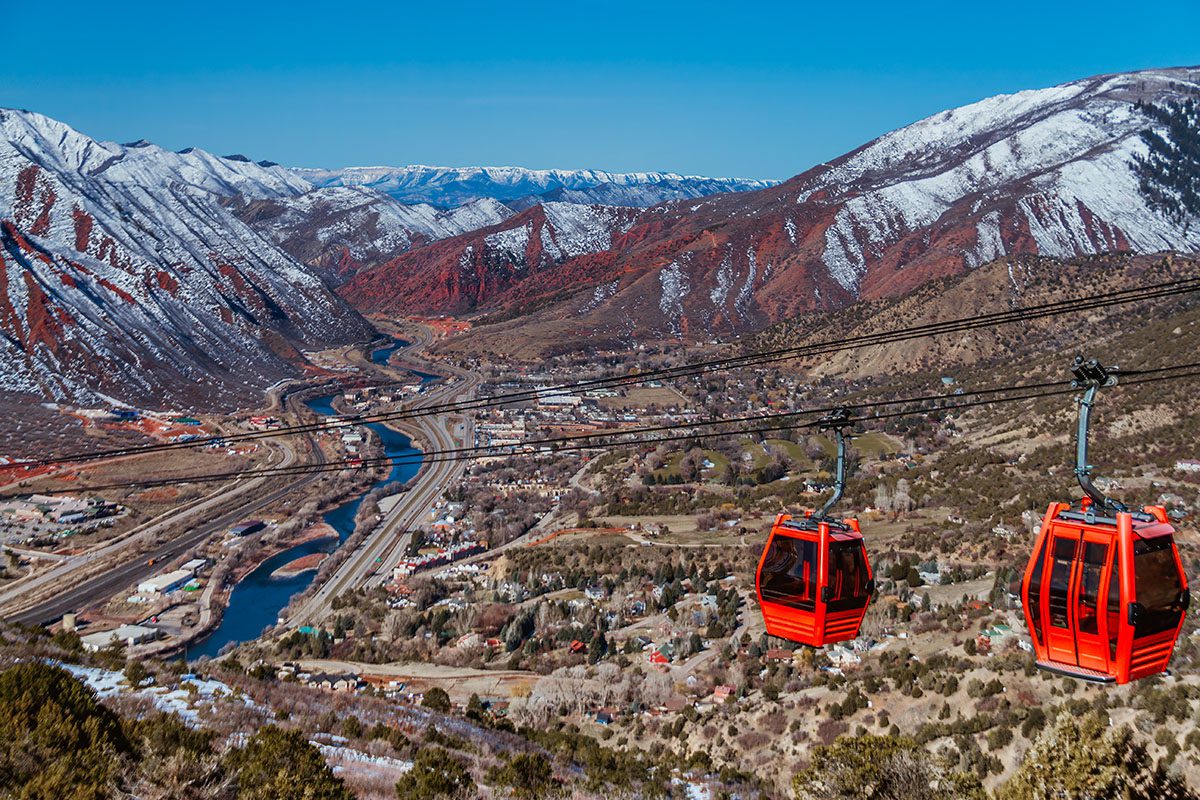
On September 5, 2021 six-year-old Wongel, accompanied by her parents and brother, and along with her uncle, aunt and their young children, took a trip to Glenwood Caverns Adventure Park, a theme park in Glenwood Springs, Colorado USA.
Wongel, along with her uncle, went on the “Haunted Mine Drop,” a ride where patrons are buckled into chairs in a six-seat passenger cart. The floor below the cart retracts, and passengers experience a 33.5-meter (110-foot) freefall drop down a vertical shaft in the mountain excavated out of solid rock, after which they are hoisted back up to the top to unload.
At the bottom of the drop, Wongel’s uncle reportedly saw that his niece was not in her seat, but that she had fallen out and was lying at the bottom of the shaft. Passengers reportedly attempted to go to her aid, but were restrained by their seatbelts, and the ride automatically rose to the top of the shaft.
An attendant at the top of the mine drop ride stated that, as the ride arrived back at the starting point, “I heard screaming and banging…I ran over and saw a man going crazy, throwing his hands in the air and crying and I saw a shocked look on his face.”
Each seat was equipped with two separate seatbelts for securing passengers. The adventure park was responsible for ensuring that each passenger was secured to their seat with the seatbelts. But in Wongel’s case, this did not occur. During the ride, Wongel became separated from her seat and fell to the bottom of the shaft, resulting in her death.
Family Files Lawsuit
Members of the Colorado Ethiopian community provided support to Wongel’s family, and a fundraiser was established to help cover her funeral costs.
In October 2021, Wongel’s parents filed a wrongful death lawsuit against the adventure park, claiming their daughter “was killed by the extreme recklessness” of the adventure park and its ride operators.
The filing of the wrongful death civic action against the defendant, Glenwood Caverns Adventure Park, alleged that “The wrongful acts causing Wongel’s death constitute a felonious killing because the Defendant recklessly caused Wongel to fall 110 feet to her death.”
The complaint claimed that “The fatal 110-foot fall was caused by multiple acts that constitute a reckless disregard of a substantial and unjustifiable risk that the acts would cause death.”
The Investigation: Contributing Factors
Investigators from the Amusement Rides and Devices Program of Colorado’s Division of Oil and Public Safety conducted an investigation of the incident.
The investigator’s report concluded that among the factors that contributed to the fatality were the following:
- Ride operators did not follow the operating procedures noted in the manufacturer’s operating manual.
This was a violation of Colorado’s Amusement Ride and Devices Regulations, which state, “Amusement Ride and Device Operators are required to operate each ride or device in accordance with…manufacturers’ recommendations.”
The manufacturer’s procedures required operators to pull the seatbelt over the passenger and secure it in place, and to visually check to confirm that each passenger has a seatbelt over their lap.
- Training for operators did not include reviewing the manufacturer’s operating manual.
This was also a violation of Colorado’s Amusement Ride and Devices Regulations, which state, “Ride Operators shall be trained in accordance with…recommendations provided by the Amusement Ride or Device manufacturer.”
Investigators found that operators were not provided with copies of the manufacturer’s operating manual.
Investigators also determined that the company’s Attractions Trainer did not reference the manufacturer’s operating manual during training.
Not having the manufacturer’s manual, and not referencing the manual during training, understandably may make it difficult for ride operators to review the manual, and to follow the operating procedures noted in the manual.
- The manufacturer’s operating manual does not instruct ride operators on how to properly address errors.
When Wongel climbed into the passenger cart, she sat in her seat, on top of the two seatbelts. She put the tail of a seatbelt across her lap, and held onto it with both hands.
Staff operating the ride, who were responsible for securing each passenger, did not secure Wongel, and they did not notice she was sitting on top of both seatbelts.
The ride has an electronic control system that senses when a seatbelt is not unbuckled at the end of one ride and then re-attached to secure the next passenger. A red indicator light alerting operators to a problem with unbuckling and re-buckling restraint devices—a “restraint cycled error”—shows on the ride’s control panel.
This error notification system alerted the adventure park staff operating the ride that there was a seatbelt safety issue, and it prevented the ride from dispatching.
Failure to understand the ride’s safety system
The ride operators, however, did not appear to understand what the issue was—that nobody had unbuckled the seatbelt in Wongel’s seat and then re-buckled it in place over Wongel’s body, safely restraining her in the seat.
Instead, in the incorrect belief that the issue was improper insertion of the seatbelt into its buckle, a ride operator repeatedly pushed the seatbelt equipment into the buckles—without recognizing that Wongel did not have the seatbelts across her lap.
As the ride operator tightened the seatbelts, the tail of the seatbelt was pulled out of Wongel’s hands. Wongel placed the tail back across her lap.
Tightening the seatbelts did not clear the error light on the ride’s control panel. So a second ride operator unlocked the seatbelts using a control panel switch, and then re-buckled all the seatbelts—again, not recognizing that Wongel did not have the seatbelts across her lap.
This reset action, however, cleared the error in the control system, and the ride’s control system then permitted the ride operators to dispatch the ride.
The ride operators returned to the control room. Seeing no errors on the control panel, a ride operator dispatched the ride.
Deficits in the manufacturer’s operating manual
The inspectors found that the first ride operator did not know how to deal with the restraint cycled error indicated on the “Human Machine Interface” (HMI) control panel screen, and the second operator, who came to assist their co-worker, did not have a complete understanding of the various HMI screen indicator lights.
The manufacturer’s operating manual—and the Glenwood Caverns Adventure Park ride-specific Haunted Mine Drop Operations Manual—instruct the ride operator to verify that the HMI screen on the control panel shows no errors.
However, neither manual details what the procedure is when errors occur—that is, when red indicator lights on the HMI screen are illuminated.
The inspectors’ report stated that the failure of the manufacturer’s operating manual to instruct operators on how to address errors “hinders operators’ ability to effectively utilize the safety in place within the system.”
The inspectors found that “not having a complete understanding of the HMI screen and reasons for the various errors, the operators were not equipped to operate and dispatch the ride.”
The Investigation: A History of Incidents
The failure to property secure Wongel in her seat was not the first lapse of its kind at Glenwood Caverns Adventure Park, however.
Failure to fasten seatbelts, 2019
In 2019, a patron at the park sent an email to the adventure park to inform park management of safety issues with the Haunted Mine Drop, including failure to check that their seatbelt was properly secured. The message (with identifying details redacted), said:
Hello, I am writing you today because of a serious security issue I experienced at the adventure park. Yesterday while my family and I were getting seated to ride the Mine Drop, everyone was getting strapped in their seats. [Redacted] came around and was buckling-in people, when it came to my turn [redacted] bucked- in [sic] my seat belt…but my belt was not around my waist. I called [redacted] attention to this (I was sitting on the belt and [redacted] didn’t even give me a chance to get up and put the belt around me) and said I’m not buckled in, [redacted] disputed this and said no I’ve buckled it in. I said no again its [sic] not, [redacted] pulled on it not bothering to check if it is indeed around my waist, and then said see its [sic] secure. I told [redacted] that the strap was underneath me, [redacted] response was “oh that’s awkward” and then went back to unlock the buckles and re buckled me in. During the whole ride all I could think of was what if I didn’t insist on [redacted] checking again? I had no idea what the ride was, I didn’t know that the floor was going to drop. This could have ended in tragedy for everyone. We were the last ones on the ride before the park closed.
Another incident worth mentioning is that while my [redacted] was waiting to go on the same ride earlier that day [redacted] was sitting on floor waiting to go in, [redacted] had his head back on the wall and [redacted] eyes closed. A [redacted] tapped him on the shoulder and said to [redacted] “please check your own seat belts because the [redacted] inside is not doing a good job checking the seat belts and you could fall”. [redacted] also mentioned that [redacted] almost had a similar experience but my bro [redacted] could not remember exactly what it was. Needless to say, the fact it was a recurring theme was disturbing.
I urge you to look into this, otherwise you could have customers who will get seriously injured or even worse, dead. Safety is and should always be the prime objective of any work place and I have serious reservations about your park. Staff who take these issues lightly reflects on management and the owner.
I think a person like [redacted] should not be working machines like this, [redacted] displayed complete indifference to the safety of customers as well as incompetence when it comes to [redacted] job. In addition, all your rides have safety measures in place to prevent such mistakes (e.g. the canyon swing and cliff hanger). I suggest you alter your equipment as a mitigation to human error.
I would like to hear back from you about the steps you have/are taking to ensuring this does not happen again, and hope to see the results next time I am there. I am not looking for any monetary gain or refunds, I simply want to make sure no one ever gets hurt during these rides.
On September 8, 2021, three days after a hauntingly similar lapse resulted in Wongel’s tragic death, the patron forwarded the email to the county coroner’s office, which conducts fatality investigations. The patron noted they never heard back from the adventure park.
An investigator from the Colorado Department of Labor and Employment, Division of Oil and Public Safety, Amusements Rides and Devices Program contacted the adventure park to see if they were aware of the email.
The adventure park’s General Manager responded, saying they were not aware of an email complaint from the author of the email message.
The General Manager explained that their ecommerce system autogenerated confirmation emails in response to webstore purchases, and emails received were batched to an ecommerce folder. This system, they said, resulted in the patron’s email “being filed to the ecommerce folder without ever being read or opened.”
The General Manager said, “This truly is a regrettable clerical error.”
Failure to fasten seatbelts, 2018
A year prior, according to a filing by the attorneys representing Wongel’s family, the mother of a six-year-old emailed the adventure park, reporting that the Haunted Mine Drop operators put passengers on the ride and then left the room to dispatch the ride, without securing the seatbelts of a teenage boy on the ride.
The attorneys claimed that the mother informed the adventure park that “all of the riders started screaming ‘wait!’ ‘wait!’ at the operators, but that the operators left the room anyway.”
The ride operators returned and put seatbelts on the unrestrained passenger.
The attorneys claimed that adventure park staff then “falsely assured the mother that the ride had a safety feature which ensured that the ride could not begin until all of the riders were restrained by seatbelts.”
A representative of the adventure park staff reportedly said, “I know this doesn’t excuse us from ensuring all belts have been secured and all guests are safe on this and all of our rides.”
The adventure park representative reportedly continued, “I can assure you that this email will allow us to retrain and continue to assure the utmost safe operation of this ride and other aspects of the park…we will take any necessary steps to improve the safety of our operation.”
Failure to disclose to investigators
The lawsuit filed on behalf of Wongel’s family said that Colorado state investigators ordered the adventure park to produce all complaints received regarding the Haunted Mine Drop since it began operation in 2017.
The adventure park, the lawsuit claimed, failed to disclose the 2019 complaint from the patron, or the 2018 complaint from the mother regarding the failure to put seatbelts on a passenger.
The plaintiffs only learned of the 2018 incident, their attorney said, because a witness called after seeing news coverage about Wongel’s death.
Jury Findings: The Verdict
On September 24, 2025, the jury awarded Wongel’s family USD 205 million.
The jury awarded $82 million in compensatory damages to Wongel’s family for their grief and loss, and $123 million in punitive damages.
The jury found Glenwood Caverns Adventure Park, and the ride’s manufacturer, Soaring Eagle Inc. (reportedly sold to Altitude Rides and Attractions LLC), responsible for 98% of the compensatory damages, with responsibility for one percent of the compensatory damages from each of the two ride operators.
The jury found Glenwood Caverns Adventure Park responsible for all punitive damages.
The law firm representing the family said, “Wongel, who was not seat belted by ride operators, fell to her death after ride operators recklessly chose not to ensure that she was restrained, ignored warning lights, and overrode the system to force the ride to launch despite the fact that Wongel was unbuckled.”
The attorneys continued, “The jury awarded significant punitive damages, in part because the amusement park had trained the employees to override warning lights to ensure that more rides could be completed each day, which increased profits to the Park. Punitive damages are designed to deter conduct and make the world safer. The verdict will ensure that amusement parks around the country train employees on proper safety practices that will protect the public.”
Glenwood Caverns Adventure Park reportedly said that the size of the award could lead to the adventure park’s closure and the loss of hundreds of local jobs. The adventure park placed blame on the ride’s designer, saying that Soaring Eagle Inc. made the ride with “a defective restraint system” that caused Wongel’s death.
“Soaring Eagle certified to Glenwood Caverns that the ride met all applicable standards, but that was not true,” a representative for the adventure park said. “They failed to perform the required engineering and risk analyses that would have undoubtedly prevented this death.”
Analysis
Is the Adventure Sector a Skilled Profession?
On reviewing the investigator’s assessment of causes leading to the fatal Mine Drop incident, one may get the impression that there exists a lack of attention to safety within the system that comprises the adventure industry.
The manufacturer’s operations manual did not describe how to address error messages that appeared on the manufacturer’s control panel screen.
The adventure park did not adequately train its staff who were operating the Haunted Mine Drop how to operate the ride.
Gaps in documentation, training and supervision were not identified and addressed before the incident occurred.
Investigators noted that one ride operator was hired on July 9, 2021 and received training on August 5, 2021. The other ride operator was hired on August 21, 2021 and received training on August 22, 2021. The incident occurred 14 days later, on September 5.
This hiring and training approach can be contrasted with that of the aviation industry, where pilots get months of training in a classroom and in a flight simulator before being permitted to operate airplanes with paying customers.
A pattern of minimal training appears throughout the adventure sector globally—from adventure tourism guides to camp counselors and outdoor education instructors. In multiple organizations, personnel who are hired to lead adventure activities with serious risk—from operating amusement park rides to guiding UTV tours or leading canoe trips—are not considered employees working in a skilled profession where extensive training, demonstrated skill development and proven expertise is expected.
In many settings, a college degree is not required or expected for those leading adventure activities. One-year certificate programs, such as the Adventure Guide Certificate from Canada’s Thompson Rivers University, or the Certificate IV in Outdoor Leadership in Australia’s vocational training system, are available in some locations. But these training courses—or more advanced trainings leading to a diploma—are not globally available or required.
Robert Niles, founder and editor-in-chief of the industry publication Theme Park Insider, said, “The theme park industry has a moral, legal, and economic obligation to promote ops as more than a minimum wage, unskilled job. Good operators do not just save guests time and parks money—they save lives. But operators cannot do that without proper training and enough supervised time on the job to develop the experience that is vital to successful attraction operation. Yet operators won’t stay on the job long enough to develop that experience unless parks provide the pay, benefits, and support that employees need to make ends meet and then to feel valued and respected.”
But individual businesses providing adventure activities are not likely to improve pay, training requirements and working conditions by themselves, as the increased costs from doing so may make an individual business which chooses to take these steps more expensive than their competitors, potentially leading to financial jeopardy.
Efforts to advance the quality and safety of the adventure sector are most likely to be successful when all elements of the sector—including adventure activity providers, adventure industry associations, and government—work together to elevate expectations, norms and requirements in the adventure industry.
This has been done in the mountain guiding sector in western Europe, where working as a mountain guide is a well-paying and sustainable profession, and where mountain guides are respected as skilled professionals. In some parts of Europe, mountain guiding is a regulated profession—like being a teacher, lawyer or physician—with a requirement for extensive training. In France, for example, mountain guides go through years of rigorous training, and the government funds and operates the National School of Skiing and Mountaineering (Ecole Nationale de Ski et d’Alpinisme, ENSA) to provide that training.
However, few other segments of the outdoor and adventure industry have been able to haul themselves up through collective action to the status of a skilled profession, thereby making it possible for adventure guides, facilitators and instructors to receive the pay, benefits and work schedules commensurate with that status.
Regulations—A Valuable Tool, But Not a Safety Guarantee
The state of Colorado has a set of well-developed Amusement Rides and Devices Regulations, which cover construction, inspection, operation, repair and maintenance of amusement rides and devices including aerial adventure courses (such as ropes courses, ziplines, and free fall devices), bungee jumping, water slides, stationary wave systems, and certain via ferrata and climbing walls.
The regulations list 22 published standards that applicable rides and devices must meet, including ASTM F2291 Standard Practice for Design of Amusement Rides and Devices, NFPA 101 Life Safety Code, and ANSI/ACCT 03-2019 Challenge Course and Canopy/Zip Line Tour Standards.
The regulations require operators to maintain “detailed records” regarding safety, inspection, maintenance and ride operator training, and to make records of daily inspections available for review.
The regulations require an annual inspection by a certified third-party inspector, daily inspections, a written emergency plan, and submission of injury reports to government regulators.
The Glenwood Caverns incident investigation illustrated the state’s effective system for investigating incidents, and its practice of sharing information from incidents in the interest of public safety.
While well-developed adventure safety regulations cannot be expected to eliminate the possibility of any safety incident, they can be a highly effective tool in reducing the likelihood and severity of incidents.
Resilient Safety Systems
Rather than focusing on avoiding lawsuits, and seeing legal compliance as the ultimate goal, adventure activity providers can seek to build a resilient safety management system that goes beyond regulatory requirements to also meet industry good practice standards which may not be required by law.
This can have the effect of enhancing the quality of the adventure experience and providing excellent safety outcomes, in addition to meeting legal obligations.
The saying “the best defense is a good outcome,” used in the medical field, also applies to adventure experiences.
Standards
Soaring Eagle, the designer of the Haunted Mine Drop, stated that the ride was designed and manufactured to meet ASTM F2291 Standard Practice for Design of Amusement Rides and Devices.
ASTM standards, including ASTM F2291, are well-regarded, and provide valuable clarity to manufacturers and operators of adventure activity installations, among others.
A wide variety of other standards applicable to the adventure and outdoor sectors—from activity-specific ISO standards and summer camp safety standards to mountain guiding and adventure safety accreditation standards—also provide important guidance for professionals seeking to understand criteria for good practice in adventure, experiential and outdoor activities.
Documentation
Investigators identified gaps in documentation in the operations manuals of both the Haunted Mine Drop manufacturer and ride operator.
This illustrates the importance of thorough, detailed documentation.
Safety documentation in adventure activities includes operations manuals, standard operating procedures (SOPs) and briefing sheets. It also includes training curricula, training lesson plans, and verification of successful completion of training.
For example, if Glenwood Caverns Adventure Park operators had a written safety briefing that they were required to orally deliver to passengers, stating that each passenger must be buckled in, and that the ride operator would buckle each passenger in and verify that they were buckled in, this could have helped passengers and ride operators understand the duties of the ride operators, and could have increased the likelihood that each passenger would be safely secured to their seat.
Absence of documentation was also prominent in a fatal 2021 incident on a zipline, where government regulators cited the zipline operator for failure to document inspections of critical safety equipment, and cited the operator for their inability to provide documentation of safety training, stating that these failures led to the preventable death of an employee riding the zipline.
Training
Investigators of the Haunted Mine Drop tragedy found that inadequate training was a factor in the incident’s occurrence.
Well-developed training, using written safety documentation as a basis for training curricula, and coupled with effective supervision as trainees gain experience, is an important factor in incident prevention.
Safety research suggests that safety measures which do not depend on the action or judgment of a person are most effective. These safety controls include eliminating risks entirely, substituting a higher hazard with a lesser hazard, and using engineering controls to isolate people from a hazard. Research suggests that person-centric controls are considered relatively weak.
However, training remains an important element in the hierarchy of controls used in designing safety management systems.
When adventure activity operators, equipment manufacturers, government regulators, and society at large all value safety in adventure activities, robust systems of training adventure activity leaders and managers is most likely to follow.
Conclusion
Wongel Estifanos was described as a happy, caring, cheerful and active girl who loved rainbows.
“She was a social butterfly,” a friend of the family stated. “Once you meet her, you just never forget who she is.”
No risk management measures can return Wongel Estifanos to her loving family. But adventure activity providers can help prevent future incidents when they build resilient safety management systems, understand and meet adventure safety standards, maintain good safety documentation, and provide robust training to activity leaders and managers.
When government bodies establish and effectively enforce well-developed adventure safety regulations, and when society values the adventure sector as a skilled profession, adventure safety and quality can be improved even further.
These measures can help make real—for adventure activity providers anywhere—what Glenwood Caverns Adventure Park said in the days following the incident:
“Safety is, and always has been, our top priority.”