Viristar, in collaboration with the Association of Nature Center Administrators (ANCA), led a webinar on outdoor safety for nature centers.
The session was attended by 56 participants from more than 20 U.S. states and Canadian provinces, representing organizations including Onondaga County Parks, Squam Lakes Natural Science Center, Stratford Ecological Center, Houston Arboretum and Nature Center, and Waskasoo Environmental Education Society.
Viristar’s director, Jeff Baierlein, opened the conversation by discussing how the recent fatal tree-fall incident at Howell Nature Center illustrates the complexity in managing risks arising from activities led by even well-developed and well-established nature center and environmental learning center programs. Jeff emphasized the importance of employing a safety management system informed by complex sociotechnical systems theory, incorporating redundancy and other aspects of resilience engineering, to help eliminate and minimize risks so far as is reasonably practicable.
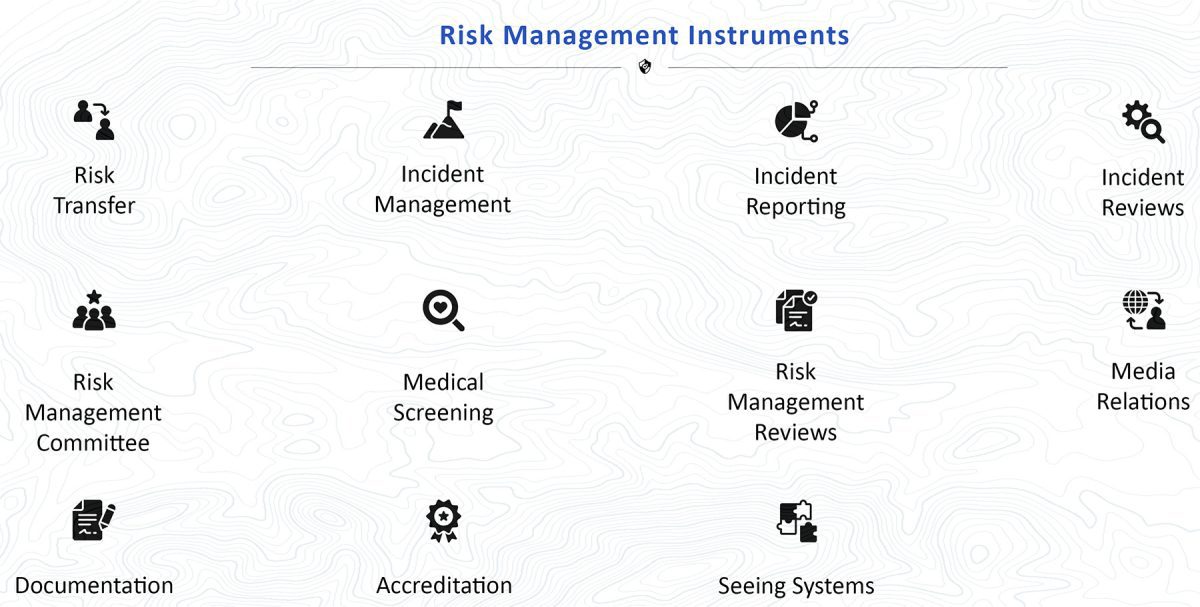
Jeff introduced the Risk Domains model for understanding the areas in which risk may arise in nature center programs. This theoretical model of incident prevention and mitigation includes eight ‘direct risk domains,’ where risks that may directly influence incident causation reside.
These direct risk domains are organizational culture, activities and program areas, staff, equipment, participants, subcontractors, transportation and business administration.
The model also illustrates four ‘indirect risk domains’—government, society, the outdoor industry and big business—which may indirectly influence the likelihood and severity of incidents in nature center and other outdoor and adventure programs.
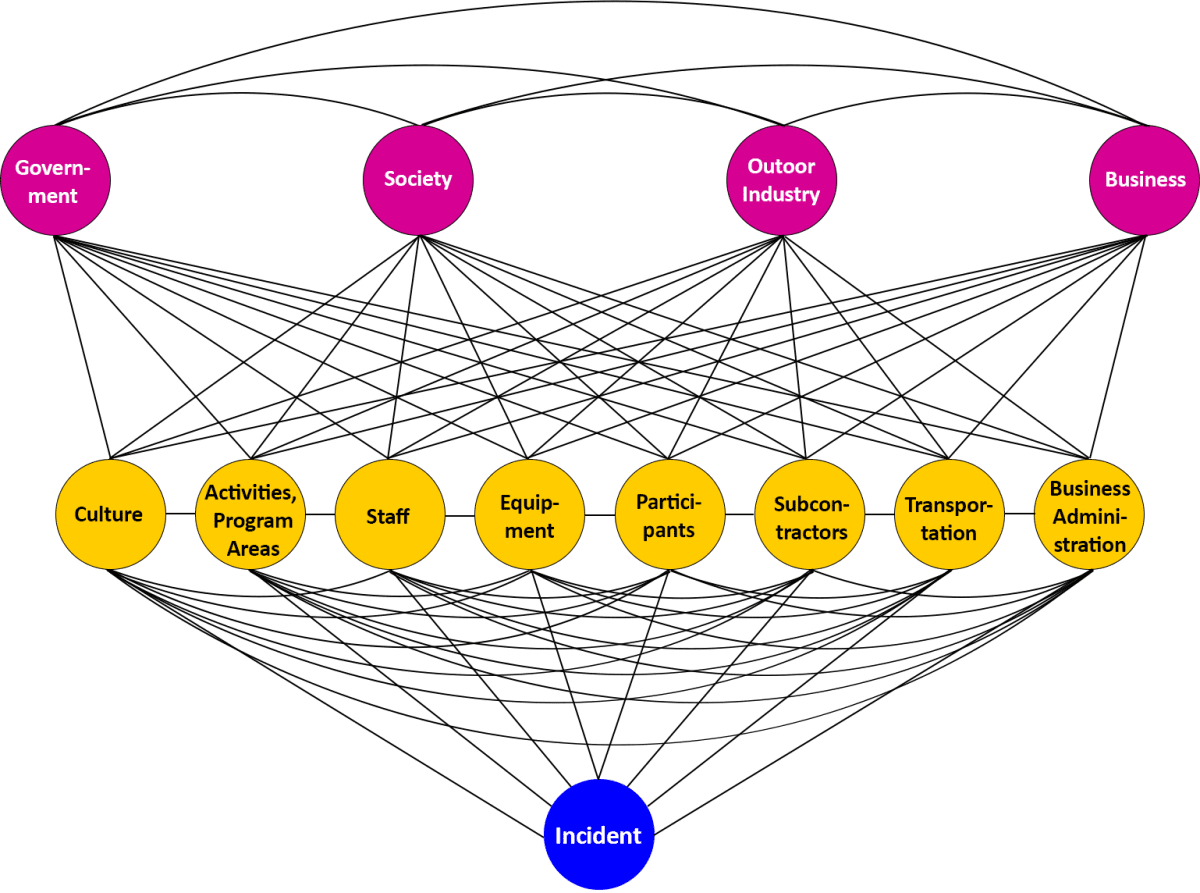
Viristar’s presentation introduced 11 “risk management instruments,” or broad-based tools, that can reduce risks across multiple or all risk domains. These risk management instruments are risk transfer, incident management, incident reporting, incident reviews, risk management committee, medical screening, risk management reviews, media relations, documentation, accreditation and systems thinking.
After reviewing the Risk Domains model, participants engaged in a reflection exercise. They were asked to consider two questions:
- To what extent have you identified risks in all applicable domains?
- To what extent have you instituted policies, procedures, values, and systems to reduce those risks so far as is reasonably practicable?
This activity encouraged attendees to evaluate their current practices for strengths and areas for potential improvement.
Small group discussions emphasized the importance of assessing risks carefully and implementing changes gradually. One participant noted, “We have a shared ethos that everyone is responsible for risk management,” reflecting an approach in which safety is considered a collective responsibility throughout the organization.
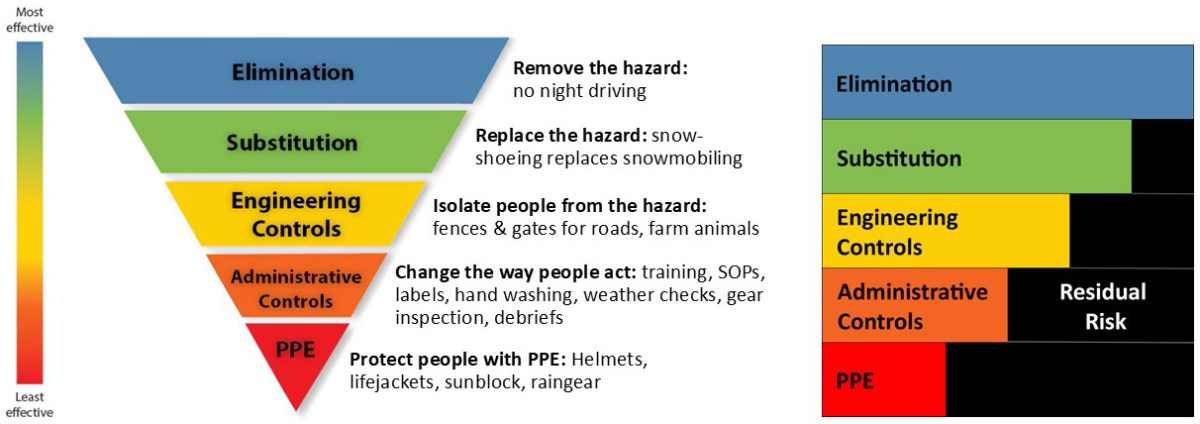
Viristar then introduced the “Safety by Design” (or “Prevention through Design”) concept, which refers to designing risk out of activities up front. A “hierarchy of controls” ranks risk management measures from most effective to least effective: eliminate, substitute or engineer out hazards when practicable, and use administrative controls (such as SOPs) and personal protective equipment (PPE) to reduce remaining risk.
Viristar’s presentation also reviewed applicable safety standards and laws, including occupational health and safety requirements, licensing, permits and liability considerations. Participants were encouraged to see legal compliance as a bare minimum requirement, and to consider voluntary industry safety standards as a means to help optimally eliminate and reduce risks so far as is reasonably practicable.
View the webinar’s slide presentation here or read an article covering the presentation content here.
Viristar and Advancing Outdoor Program Safety and Quality
Viristar has worked with organizations, associations and government bodies around the world to support quality and safety in outdoor and adventure programs. Viristar staff have:
- Provided risk management reviews and training to outdoor schools across Oregon
- Advised the Japanese government on adventure safety regulation
- Written adventure safety regulation for the eastern European nation of Georgia
- Provided risk management training to Singapore government personnel from both the Ministry of Education and the Ministry of Culture, Community and Youth
- Provided outdoor safety training to staff, volunteers and leaders at nature centers, and similar organizations providing outdoor or adventure experiences, in more than 80 countries and territories
Viristar remains committed to supporting nature centers and other outdoor and experiential learning programs in delivering high-quality experiences that foster life skills, personal growth, teamwork, recreation outcomes, environmental stewardship and academic learning. We look forward to continuing to collaborate with outdoor professionals to expand access to enriching experiences with good safety management provided to you and adults worldwide.

Additional Information
Nature centers and environmental learning centers have additional opportunities to improve safety outcomes in their programs.
The textbook Risk Management for Outdoor Programs: A Guide to Safety in Outdoor Education, Recreation, and Adventure offers detailed guidance on good safety practice.
Those looking for more comprehensive training can enroll in the Risk Management for Outdoor Programs course. This 40-hour online class offers an in-depth exploration of adventure safety theory and practice, and guides participants in developing a customized, systems-informed safety improvement plan for their own program.