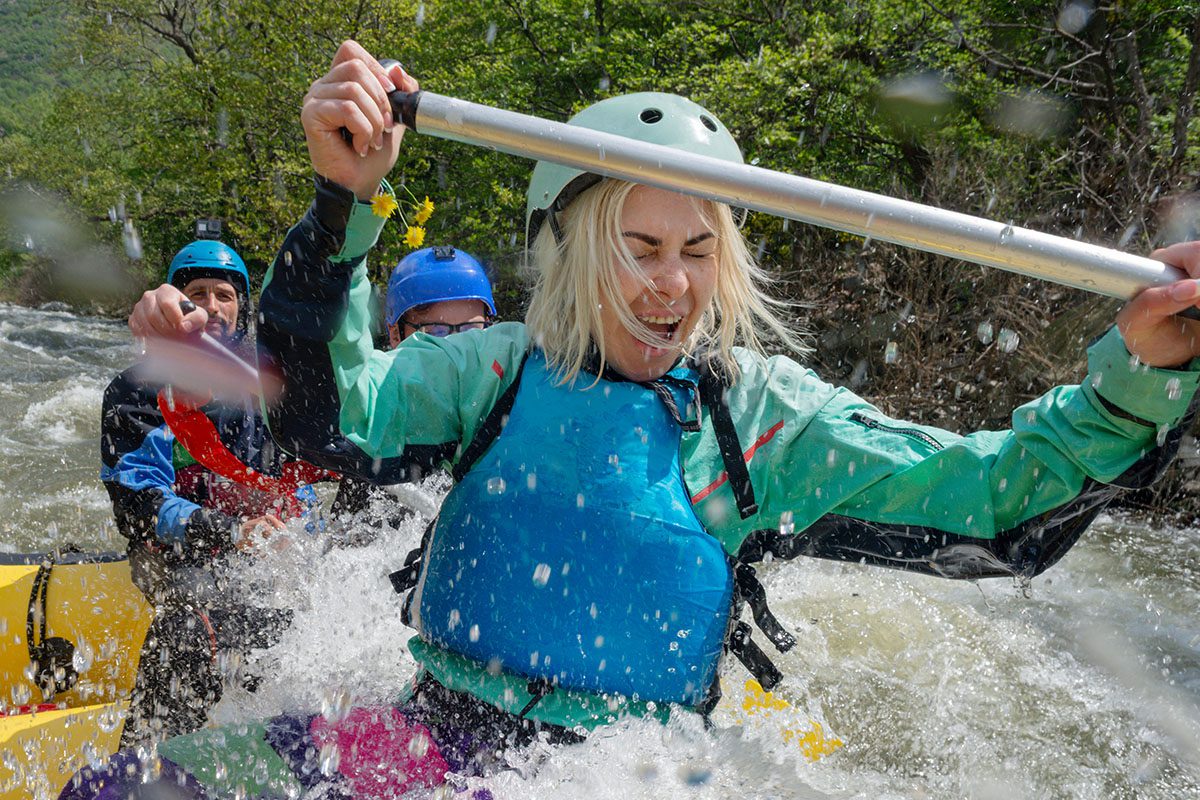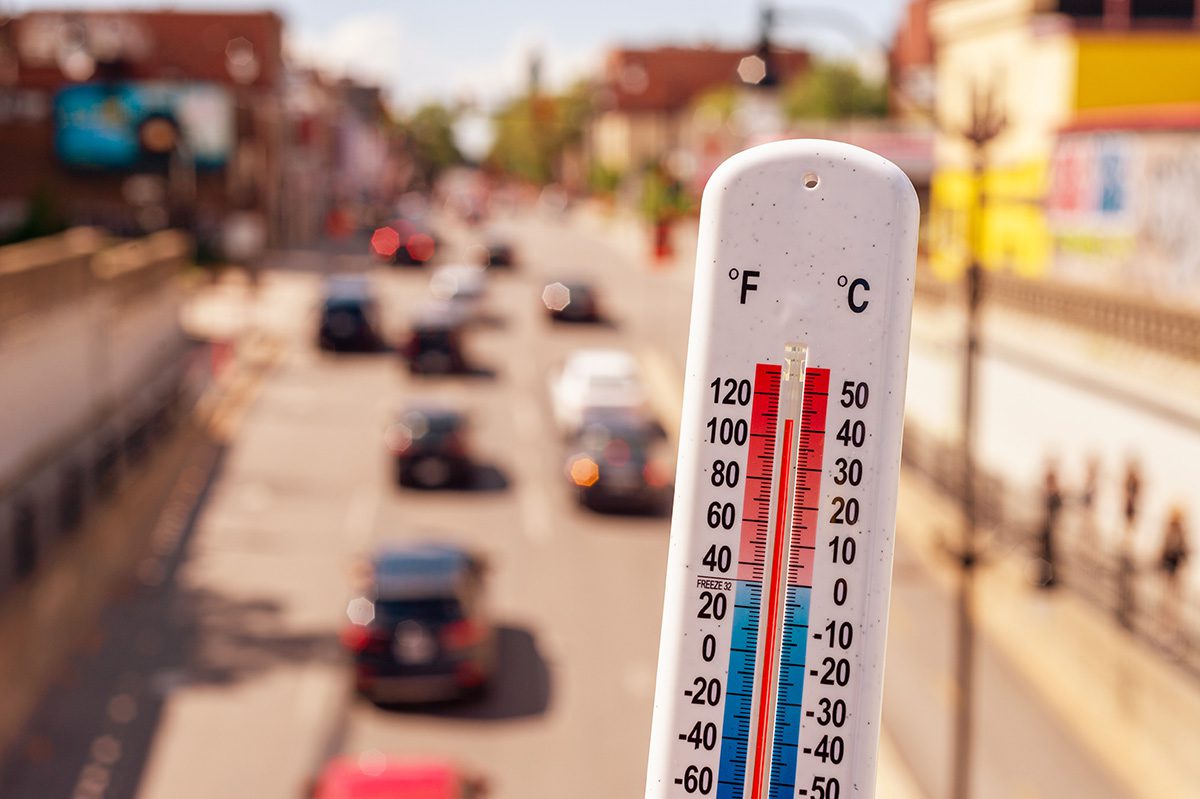
Extreme heat is gripping countries across Europe and North America this summer.
The World Health Organization (WHO) said on June 28 that in the past week, more than 1,300 excess deaths have been recorded in Europe alone, linked to high temperatures there.
The WHO Director-General said, “Right now 150 million people are living under extreme heat, hundreds have died, schools are shut, grids are buckling.”
The record-shattering heat wave had temperatures exceeding a historic 2003 heatwave blamed for 15,000 heat-related deaths.
Leaders of outdoor and adventure programs asked, how can we appropriately manage risks of providing activities in the heat?
Basic precautions for activities in heat challenge settings
Simple measures for reducing risk of heat-related illness include, but are not limited to:
- Pay attention to weather forecasts and alerts
- Modify or postpone activities
- Stay hydrated
- Seek shade
- Wear suitable clothing
- Stay alert to signs and symptoms of heat-related illness
- If going in the water to cool down, follow water safety precautions
But to most effectively reduce risks of heat-related illness and weather-related incidents in the outdoor and adventure context, a comprehensive safety management system (SMS) should be developed and implemented.
Safety Management System
A safety management system can be understood as a documented management system for eliminating and reducing risks so far as is reasonably practicable.
A safety management system can help operators of outdoor and adventure activities comply with applicable laws and regulations and meet industry safety standards, including the use of standard operating procedures (SOPs) and standardized safety briefings.
An SMS often involves documents such as:
- Risk Management Plan
- Incident Response Plan (Emergency Response Plan)
- SOPs
- Briefing sheets
- Medical screening documents
- HR documents
- Policies (e.g. safeguarding)
An SMS is much more than documents, however. A well-developed SMS describes business processes, addresses safety culture, establishes corporate safety-related values, describes operating systems, and incorporates a continuous improvement process.
Safety Management System Characteristics
A safety management system designed to effectively address heat-related and other risks arising from outdoor and adventure activities may ensure that the following SMS criteria are met:
- SMS must be documented, implemented, and continually improved
- SMS must illustrate organization’s commitment to safety
- SMS must state who is responsible for the SMS
- SMS must be informed by safety requirements and good practice standards
- SMS must have measurable safety objectives
- SMS must assign safety authorities & responsibilities to competent staff
- SMS must document safety communications procedures
- Staff must be trained on the SMS
- Risks must be identified and assessed
- Risks must be eliminated where practicable, and minimized
- SOPs must be implemented for activities
- Staff must be competent for their role
- Dynamic risk management must occur
- Participants must be adequately supervised
- Suitable clothing and equipment must be appropriate and available
- Emergency communications must be established
- Emergency preparedness and response plans must be maintained
- Incident response procedures must be in place
- An incident review process must be in place
- Documentation must be complete and accessible
- A continuous improvement process must be in place
Documents that may be part of the SMS include, but are not limited to:
- Risk Management Plans
- Emergency Response Plan
- Forms, e.g. Incident Report, Evacuation Report, Medical Facility Visit report
- Activity/course/event logbooks
- Medical screening (health history) form
- Medical screening manual
- Medical screening supplementary questionnaires
- Medical protocols
- Training attendance verification documents
- Safety reports and safety memos
- Administrative Standard Operating Procedures (SOPs)
- Field manual/instructor handbook/activity staff SOPs
- Employee Handbook
- Staff training plan
- Staff training curricula
- Job descriptions & position announcements
- Waivers or other exculpatory agreements or liability forms
- Vehicle operations manual
- Vehicle operator checkoff or testing documents
- Vehicle inspection checklists
- Plant/equipment/gear maintenance and use logs
- Medical/first aid inventory forms
- Risk assessments
- Logistics procedures documents
- Safety briefing documents
- Physician referral form
- Evaluations and debrief forms
Although developing an effective safety management system may feel complex to professionals who have not done this before, it can be a relatively straightforward project when using an established set of criteria, such as found in Adventure Safety Accreditation standards.
Laws and regulations
A well-developed safety management system should be informed by legal requirements of the jurisdictions where an outdoor or adventure program operates.
For example, in the USA, the Occupational Safety and Health administration has published standards content for heat exposure in the workplace, although a national heat safety standard is yet to be finalized.
In Washington state in the USA, organizations wishing to provide outdoor nature-based child care programs (sometimes known as ‘forest school’ or ‘bush school’) are required by law to observe weather conditions to protect child safety; the regulations note that conditions that pose a health or safety risk may include, but are not limited to, heat in excess of 37.8° C (100° F) or pursuant to advice of the local authority, and cold less than -6.7°C (20° F), or pursuant to advice of the local authority.
Industry Standards
In addition to supporting compliance with the law, an SMS effective in preventing heat-related incidents should be informed by industry standards, such as standards relevant to the outdoor, adventure, experiential or travel sectors.
Viristar staff are currently engaged as an expert witness in multiple lawsuits involving outdoor and adventure activities. Providing an expert opinion requires a close understanding of the fine details of relevant good practice standards, and this close interaction with the legal process makes glaringly evident that generalities—like “stay hydrated and seek shade”—alone are not enough for good safety management. Understanding and conforming to good practice standards—specific to an operator’s activities, operating locations and participant demographics—is required.
Singapore’s Code of Practice for Outdoor Adventure Education Activities
Singapore, a country in the tropics with both a strong commitment to outdoor adventure activities and robust safety governance, recently published an outdoor adventure education Code of Practice, with a section dedicated entirely to safe conduct of adventure activities in hot weather.
The Code of Practice, published by Enterprise Singapore, requires activity leadership to:
- implement regular, appropriate fluid intake to help avoid dehydration;
- conduct physically demanding activities under shelter, where possible;
- conduct physically demanding activities in a cooler part of the day, where possible;
- monitory everyone involved in the activity for heat-related:
- illness (e.g. heatstroke), and
- conditions (e.g. heat rash);
- institute rest breaks where necessary; and
- if required for safety, suspend the activity.
The Code of Practice also requires reasonable steps to be taken to protect everyone involved in the activity from the adverse effects of sun exposure, which can involve wearing suitable sun-protective clothing and headgear and UV exposure-protecting eyewear, wearing sunscreen of at least 30 SPF and actively encouraging its use, and using shaded areas when appropriate.
The Code of Practice also requires reviewing official weather forecasts and advisories during activity planning, immediately prior to starting an activity, and regularly throughout the duration of the activity.
The Code of Practice states that SOPs must address environmental risks, including of hot weather. And activity plans must include “trigger points,” specific circumstances which indicate a need for initiation of an action such as modifying, suspending or terminating the activity, or evacuating the activity area. Trigger points can be based on measured environmental conditions such as wet-bulb globe temperature level or observed weather events.
Australian Adventure Activity Standard and Good Practice Guides
Like Singapore, Australia has a well-established outdoor and adventure sector, which publishes an Adventure Activity Standard along with associated Good Practice Guides.
This guidance states that a risk management plan must be completed and documented, and that the risk management plan must address all relevant environmental conditions, specifically noting that heat should be considered, and that activity leaders should monitor for heat-related illness.
National Athletic Trainers’ Association Position Statement
The National Athletic Trainers’ Association in the USA has published a position statement on exertional heat illnesses. While this isn’t a perfect match for all outdoor adventure activities, the document provides credible, evidence-based best-practice recommendations for the prevention, recognition, and treatment of exertional heat illnesses.
Their recommendations address medical screening, heat acclimatization, hydration, assessment of heat illness, access to medical care, treatment equipment such as cold-water immersion tub, rest breaks, treatment protocols and return-to-activity guidelines.
Health and Safety Sector
Bodies involved in sectors such as meteorology and health and safety have useful advice, although it’s often general in nature.
For example, the UK government publishes guidance about hot weather safety, and the WHO offers keeping cool tips for extreme heat.
The health and safety regulator in Washington state USA publishes an Outdoor Heat Safety Plan template, designed to support worker safety, which can be adapted and incorporated into a safety management system.
In Maryland in the USA, the state’s Department of Education says that young children should not play outdoors when the air temperature is 37.8° C (100° F) at 50 percent relative humidity, but that in those conditions older children may play outside for “a very limited time” with proper precautions.
Adventure Safety Accreditation Standards
The Adventure Safety Accreditation standards by Viristar address heat and other weather-related risks in a number of locations, including in standard AP.10 on weather-related risks.
That standard, including its sub-component Elements of Performance and contextual notes, is described below.
AP.10 – Weather-related risks are appropriately managed.
Elements of Performance
- The organization understands and documents the weather conditions that are reasonably foreseeable in areas of program operations, and the risks that may arise from them.
Note 1:
Examples of conditions include, but are not limited to:
- The prevalence of afternoon thunder and lightning storms in the summertime
- Katabatic winds affecting travel conditions or fire hazard
- Morning fog
- Seasonal onset of monsoons
- Temperature extremes
Note 2:
Procedures may be documented in program area assessments, SOPs for program areas, or elsewhere.
- The organization has developed and documented appropriate policies and procedures for managing weather-related risks.
Note 3:
Examples may include but are not limited to:
- Avoiding summer-time entry into ice caves due to weather-related instability
- Weather-specific transportation policies (such as equipment carried, approved itineraries, and vehicle organization training) which account for seasonal weather changes
- Not exercising dogsledding dogs when temperatures exceed a safe maximum for dog exertion
- Aiming to cross over peaks and passes in the morning so as not to get caught in afternoon lightning storms
- When lightning occurs at night or when participants are in their shelters for the night, getting out of sleeping bags, putting on warm clothes and rain gear as needed, and moving to a location with lower risk of lightning strike
- Carrying thermometers, weather radios, or other instruments
- Avoiding hiking between 10 am and 4 pm when temperature, heat index (apparent temperature) or Wet Bulb Globe Temperature meets a certain level
- Employing acclimatization periods for persons newly active in hot settings
- Making sea kayak launch decisions based on weather conditions
- Deciding when to commence “lightning drill” positioning
- Making paddle/no-paddle decisions based on actual or anticipated river level (flow rate)
- Pre-planning and awareness of evacuation routes when severe weather which might require evacuation is reasonably foreseeable.
- Procedures for evaluating and responding to low air quality from wildfire smoke or other sources
- Weather considerations related to suitability of aircraft-based evacuation
Note 4:
Policies and procedures may be documented in area-specific plans or guides, SOPs for specific activities, or elsewhere.
- The organization assesses current and anticipated weather conditions immediately prior to and during experiences, as appropriate.
Note 5:
Examples of conditions assessed may include but are not limited to:
- Wind speed, direction, consistency, gradient and turbulence prior to paragliding launch
- Presence of storm clouds and distant thunder/lightning during hiking or paddling
- Weather conditions and forecasts influencing avalanche hazard
- Fire danger forecast and fire restrictions
- Weather conditions influencing safe travel by snowmobile or dogsled on ice over water bodies
Note 6:
- Assessment may be conducted via accessing weather forecasts, bulletins, watches, warnings, advisories, weather-related declarations and similar alerts and communications issued by meteorological services, land managers, maritime authorities such as Coast Guard, or others
- Checking air temperature or other conditions using instruments
- Observation of natural signs
- Staff are competent in assessing weather conditions and take appropriate action in response to weather conditions.
Note 7:
Assessment steps may involve, but are not limited to:
- Ability to access and interpret weather forecasts
- Ability to understand weather maps (synoptic charts) as appropriate
- Use of technology such as weather radios
- Ability to use natural signs (such as storm cloud formation and wave height) to aid in practical forecasts and assessments
- Knowledge of weather reasonably foreseeable in the operating area
Note 8:
Actions may include, but are not limited to:
- Making travel/do-not-travel decisions, such as not beginning a paddle day or postponing a water crossing
- Changing pace of travel and frequency of safety checks
- Changing the level of supervision of participants
- Adjusting turnaround times on peak ascent
- Initiating lightning drill
- Leaving unsafe areas and relocating to a safer environment, such as:
- Staying out of low areas and watercourses to avoid flash flood encounters
- Evacuating from high ropes challenge course due to lightning risk
- Relocating from one campsite to another in a more suitable location
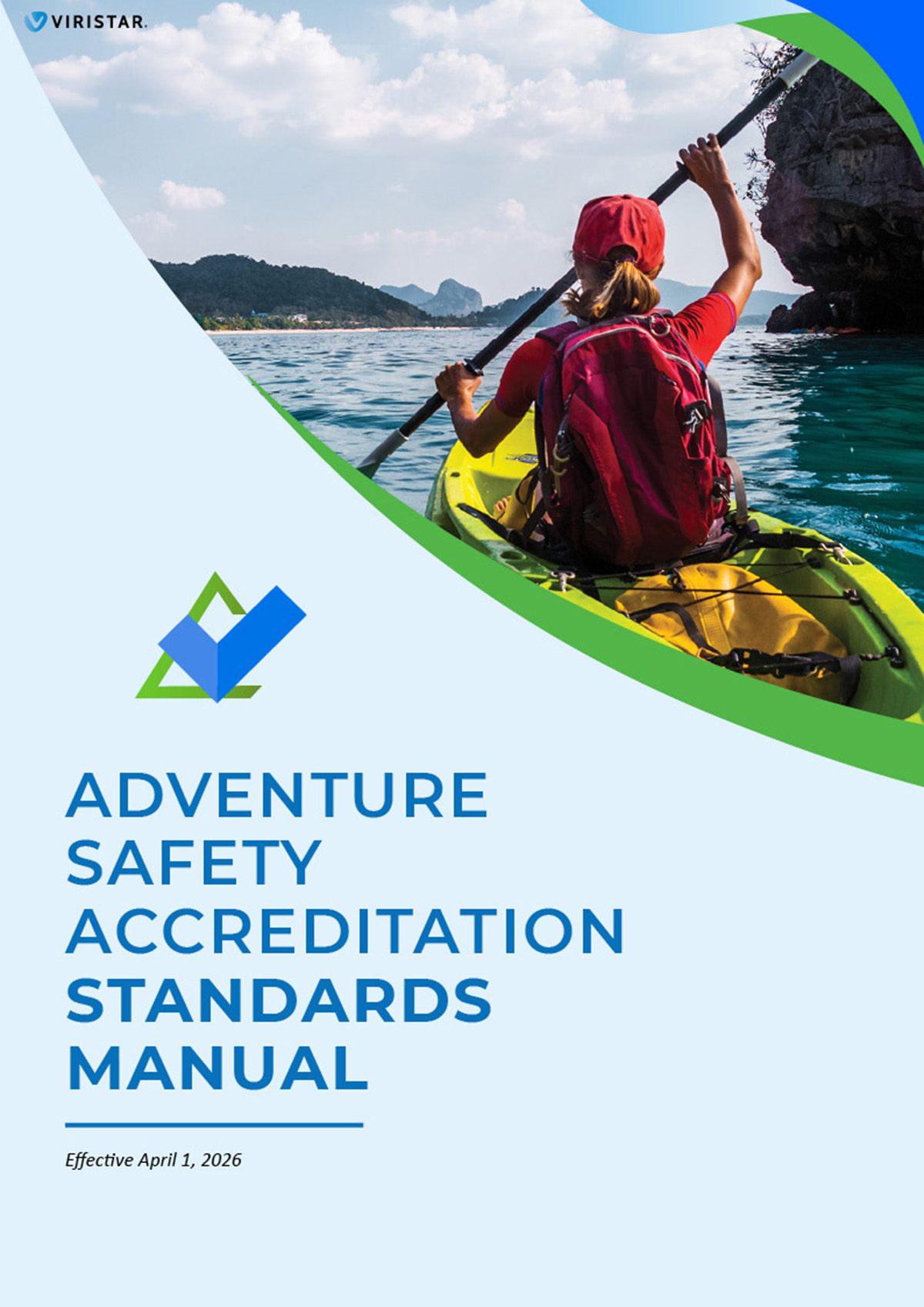
This standard, addressing the management of weather-related risks, is one of 100 standards in the 2026 version of the Adventure Safety Accreditation standards manual.
But a safety management system addressing heat and other environmental hazards should go beyond focusing narrowly on measures directly and focused on assessing and mitigating temperature extremes and associated environmental conditions.
The Adventure Safety Accreditation program has 21 categories of standards, arrayed in three broad sections:
General
- Safety Management System
- Leadership and Management
Risk Domains
- Activities and Program Areas
- Staff
- Equipment
- Participants
- Contractors
- Transportation
- Business Administration
Risk Management Instruments
- Risk Transfer
- Incident Management
- Incident Reporting
- Incident Review
- Risk Management Committee
- Medical Screening
- Risk Management Review
- Media Relations
- Documentation
- Accreditation
- Systems-Based Safety
- Continual Improvement
Standard AP.10 – Weather-related risks are appropriately managed falls in the “Activities and Program Areas” category, where risks specific to adventure activities and program locations are addressed.
Examples of other standards that are applicable to managing weather-related risk include, among others:
- AP.09 – Hazards and risks in operating areas are appropriately evaluated and addressed
- AP.11 – The organization documents approved time-based plans, including alternates, for programs and activities.
- ST.03 – Staff receive sufficient and appropriate training.
And other standards—having to do with participant supervision, medical screening, safety equipment, emergency response, incident reporting and more—are designed to help reduce risks from environmental and other hazards.
Standard Operating Procedures
Well-developed published standards for safety in outdoor and adventure activities can be extremely helpful. (Here, ‘standards’ refers to documents also known as Codes of Practice, Adventure Safety Guidelines, Good Practice Guidelines, or by other terms.) These documents tend to be somewhat general in nature, however, so it’s important that standard operating procedures customized to the particular circumstances of a given organization are developed and used as well.
SOPs should be written to take into account the particular activities, geographic locations, and participant characteristics of the outdoor, experiential learning, educational travel or adventure program.
When considering developing an organization-specific SOP for safe conduct of activities in a heat challenge environment, and when to modify or stop activities, factors such as but not limited to the following should be considered:
- The nature of physical activities
- Air temperature
- Humidity
- Sunlight
- Heat sources (e.g. sun, road surfaces)
- Air movement
- Clothing
- Individual/personal risk factors (e.g. pre-existing health conditions and lifestyle)
The most accurate way to measure environmental heat impact on body temperature is by measuring wet bulb globe temperature (WBGT), not temperature or “Heat Index.” WBGT monitoring devices evaluate ambient temperature, relative humidity, wind, and solar radiation to calculate heat stress. Both expeditionary/field-based and site-based programs can use WBGT monitoring devices.
Viristar recently drafted an SOP for an organization that provides road and trail running activities as part of a K-12 school experiential learning program. The running SOP states, in part:
The following precautions are recommended if hot weather conditions are in the following Wet Bulb Globe Temperature (WBGT) ranges:
- >30°C: running activities should not take place, due to high risk of heat-related illnesses, such as heat exhaustion and heat stroke
- 28-30°C: activities should not exceed one hour; must include at least 20 minutes of rest breaks
- 24-28°C: activities should include at least four separate rest breaks each hour with a minimum duration of four minutes each
SOPs are best when written in conformance to technical writing standards for safety documents.
Briefing Sheets
Standardized safety briefings are an important part of reliably delivering consistent, complete safety information to activity participants.
In a recent tragic incident where a participant lost their life during an adventure activity, the family of the deceased filed a lawsuit against the activity operator, basing their complaint in part on a claim that the activity provider “did not issue an adequate or truthful pre-trip safety briefing that disclosed known risks.”
The Coroner’s report into the death of Lachlan Cook, a 16-year-old with Type 1 diabetes, on a school trip to Vietnam, noted that the school and the trip provider “did not hold a pre-trip briefing specific to students with pre-existing conditions…to ensure that risk minimisation strategies were in place before the trip commenced.” The school and the activity provider pleaded guilty to criminal charges; both were convicted and fined.
The owner of a stand-up paddleboarding company was recently sentenced to 10-and-a-half years in prison over a fatal paddleboarding incident, where both the prosecutor and judge noted that there was no safety briefing before starting the trip.
Safety briefings (such as this example challenge course safety briefing) may be most effective when they follow safety briefing good practice guidelines.
Underlying Contributing Factors
Good activity procedures and safety briefings can help minimize heat-related risks. However, recent increases in heat safety concerns are also driven in part by climate change.
As a deadly heatwave crossed Europe last week, WHO Director-General Tedros Adhanom Ghebreyesus said, “Driven by climate change and global warming, the phenomenon of the ‘once-in-a-generation’ heatwave is now occurring nearly annually. We were warned.”
Scientists stated that the catastrophic heatwave would have been virtually impossible without human-caused climate change, with recent elevated nighttime temperatures more than 100 times more likely than in 2003.
Deadly heat from climate change is not inevitable; the presence of dangerous climate change, like active shooters, is in part a political choice, influenced by the acts of political leaders: the World Health Organization notes, “The negative health impacts of heat are predictable and largely preventable…action on climate change combined with comprehensive preparedness and risk management can save lives now and in the future.”
Outdoor, travel, experiential learning and travel programs, and the industry associations of which they are a part, can engage in advocacy to address the global climate emergency and eliminate the risks arising from a changing climate.
Organizations and individuals with the capacity to engage in advocacy can contribute time, money or other resources to causes, organizations and campaigns that seek to address the climate crisis. Individuals can likewise vote, and encourage others to vote, in ways to lead to a more sustainable planet and a healthy environment, upon which all life depends.
Conclusion
Basic safety measures like staying hydrated, reducing exertion, and wearing protective clothing can reduce heat-related risks.
But to be most effective, outdoor and adventure activity providers should develop a comprehensive safety management system that identifies and addresses weather-associated and other risks.
Organizations should understand and comply with relevant health and safety laws, and take advantage of the general guidance in well-developed published industry standards and good practice guides.
Organizations should then create and use customized standard operating procedures applicable to their unique circumstances, and ensure safety briefings provide adequate, consistent risk management information.
And those with the resources to do so can engage in advocacy to address the underlying causes leading to increasing heat risks.
By taking these steps, experiential learning programs, adventure tourism and travel providers, and other adventure operators can help people experience the many benefits of outdoor and adventure activities while enjoying a welcoming environment and good safety outcomes.