
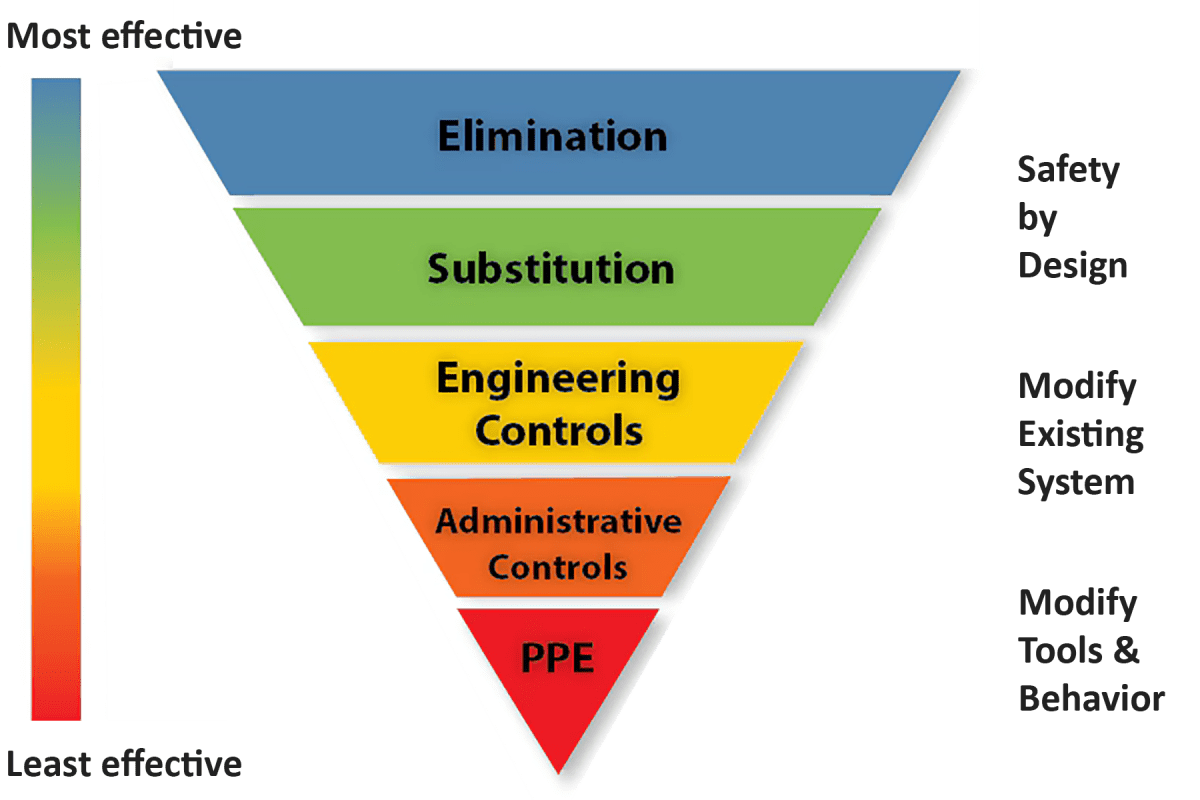
An analysis of safety research on preventing workplace safety incidents supports the effectiveness of a “Safety by Design” approach to risk management, using a variety of safety measures in a hierarchy of controls, from most to least effective.
The Safety by Design approach focuses first on eliminating hazards, then substituting greater hazards with lesser hazards, then using engineering controls like separating people from hazards.
These measures are followed by less-effective approaches, such as administrative controls focusing on the behavior of individual persons, for example training and the use of standard operating procedures (SOPs).
Finally, the least-effective approach, the use of personal protective equipment (PPE), is used.
The 187-page meta-analysis, Safety interventions for the prevention of accidents at work: A systematic review, was published in 2022 by a team of researchers led by Dr. Johnny Dyreborg at Det Nationale Forskningscenter for Arbejdsmiljø (The National Research Centre for the Working Environment), an independent sector occupational health and safety research institution under Denmark’s Ministry of Employment.
Researchers analyzed 100 original studies, including 16 randomized controlled trial study designs, covering 31,971,908 individuals and 15,505 injuries.
The researchers found that safety interventions aimed at the organizational or group level were more effective in improving safety outcomes than interventions operating only at the individual level.
Specific Safety Research Findings
Seven principal findings from the meta-analysis are:
- Safety interventions directed at the group or organizational level are generally more effective than efforts at changing the behavior of individual people.
- Engineering controls are effective in reducing injuries.
- Interventions that combine elements across multiple levels of the system are effective.
- Evidence-based approaches were more effective.
- Safety training should address specific needs, and be used with other interventions.
- Safety legislation, regulation and enforcement can have large population-based effects.
- More research is needed.
These seven findings are briefly described in more detail below.
1. Safety interventions directed at the group or organizational level are generally more effective than efforts at changing the behavior of individual people.
It is more effective to eliminate and reduce workplace hazards, through the design of work systems, tasks and processes, than to try to teach workers how they should individually go about attempting to mitigate hazards they might encounter.
This is illustrated by the phrase, “Change the work, before you try to change the worker.”
2. Engineering controls are effective in reducing injuries.
This was especially true when the use of the engineering control does not require a decision on the part of the worker. In the words of the study authors, “Effects were greater when these control measures worked independently of worker ‘decision‐to‐use’ at the worksite.”
This reinforces the view of the USA’s National Institute for Occupational Safety and Health, which says that elimination, substitution and engineering controls “are more effective because they control exposures without significant human interaction.”
The study authors define engineering controls to include:
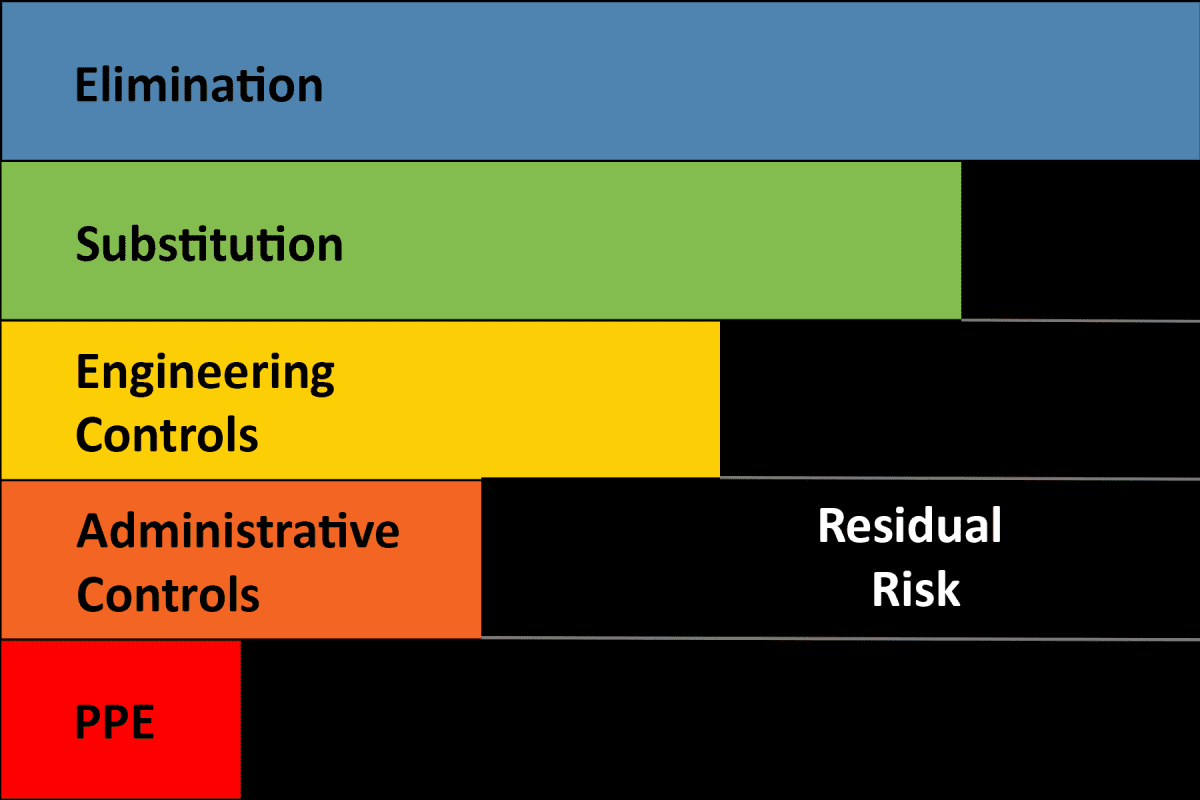
- Elimination (removal of the hazard)
- Substitution (replacement of a greater hazard with a lesser hazard)
- Engineering controls such as isolation, for instance by fences, lockout/tagout, or other physical barriers or separation
This is more broad than how some others define engineering controls, where elimination and substitution are considered different control measures.
3. Interventions that combine elements across multiple levels of the system are effective.
Researchers found that this was particularly the case when engineering controls (such as elimination, substitution or isolation from a hazard) are included.
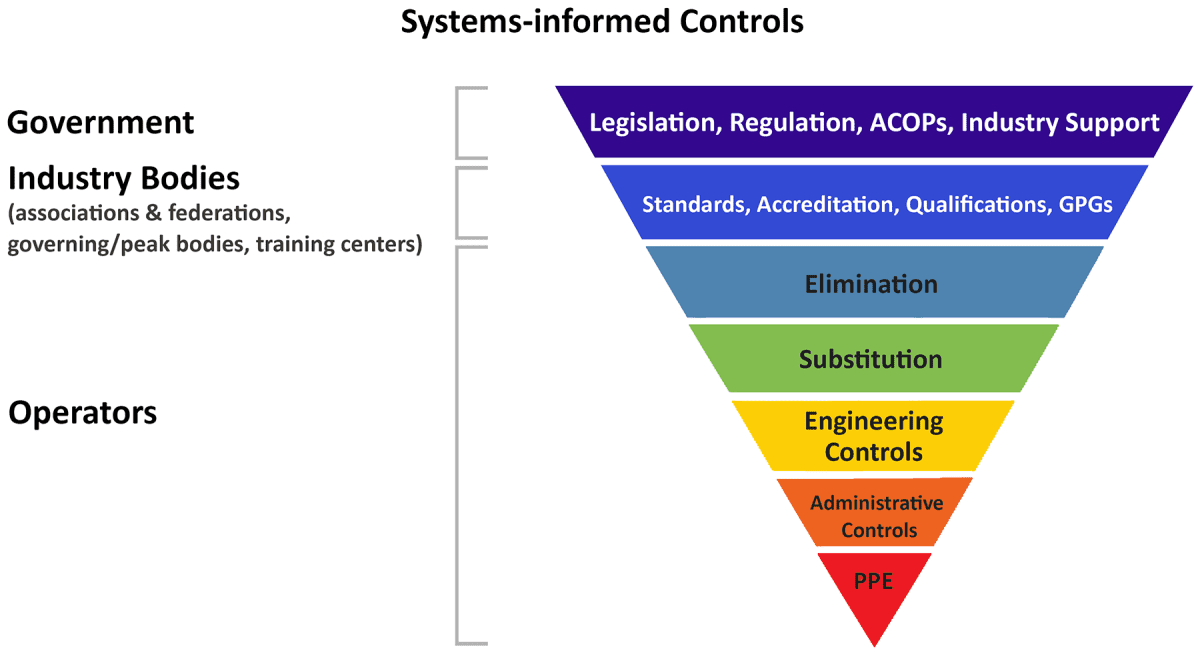
This multi-faceted approach includes components directed at the group or organization level, such as:
- Improving safety culture (also known as “safety climate”)
- Modifications of the physical environment
- Benchmarking organizational performance against industry standards (such as through certification or accreditation programs, especially where there is strong reputational advantage to meeting those standards)
- Involving workers in safety decisions and safety management systems
- Legislation
- Regulation
This also includes components directed at the individual level, such as:
- Safety training (to change attitudes or behaviors)
- Incentives
- Skills training (such as how to operate equipment)
4. Evidence-based approaches were more effective.
This refers to interventions based on good epidemiologic evidence of causality and “a strong conceptual approach.” Researchers found interventions with a clear theoretical basis for the intervention approach were more effective than interventions without that theoretical grounding.
5. Safety training should address specific needs, and be used with other interventions.
General approaches to preventing injuries, like general coaching or safety training, were found to be less effective than behavioral approaches that explicitly covered specific, relevant hazards, or specific gaps in knowledge or competencies.
Research suggests that training that is engaging and participatory—for example, involving discussion and active participation—is more effective than one-way messaging.
The researchers noted that general safety training can have a role, but should be combined with other efforts that address specific hazards and training needs.
Safety training and safety education campaigns, the researchers found, should be combined with other efforts in the hierarchy of controls in order to be effective. Without designing out hazards in the first place, creating work processes to minimize risk, and using engineering controls that don’t depend on worker knowledge or action in order to be effective, training by itself is unlikely to be effective.
6. Safety legislation, regulation and enforcement can have large population-based effects.
Regulation without adequate enforcement is unlikely to be effective. Regulation may have relatively modest effects at an individual level; the effectiveness of legislation and regulation comes in large part because it can affect large numbers of people.
Legislation is likely to be most beneficial when it is developed based on available scientific evidence, rather than purely political influences.
7. More research is needed.
Additional research should be conducted to establish good evidence regarding the level of effectiveness of measures such as:
- Safety training
- Efforts to change safety culture
- Administrative controls (such as SOPs, safety labels, hand-washing, weather checks, gear inspection and debriefs)
- “Soft regulation” such as safety audits and certification programs
Implications for Adventure, Outdoor, Experiential and Travel Programs
Managers of adventure-based, outdoor, experiential learning and travel programs can use this information to help make their safety management systems as effective as possible.
Administrators and senior organizational leadership can ask themselves questions such as the following:
Does our safety management system focus on organizational-level safety measures?
Viristar and Safety Science
At Viristar, our risk management consulting services, such as our Risk Management Review and Safety Systems Development services, are informed by this systems-based approach to safety.
Our consulting projects, currently taking place on four continents—involving adventure tourism, experiential learning, summer camp, environmental science education, wilderness expeditioning, and outdoor education—evaluate the safety management systems of our clients against Safety by Design principles.
Viristar’s work with a client to develop an Expedition Safety Plan for a source-to-sea descent of the Congo River by kayak is informed by this approach. While some of the extreme dangers of this 4,7000-km expedition—such as those arising from hippopotamuses and crocodiles, as well as crime, civil unrest, terrorism, armed conflict, and kidnapping in the Democratic Republic of Congo—are extremely difficult to mitigate in the context of a primarily solo kayak trip, a Safety by Design approach can give the best chance for a successful expedition.

Likewise, the Risk Management for Outdoor Programs and Foundations of Adventure Safety training courses Viristar offers provide professionals in the educational travel, outdoor recreation, tourism, experiential learning and related sectors with knowledge and skills important in a developing safety management system for their organization aligned with these evidence-based good practice design principles.
This evidence-based approach to understanding effective systems-based methods for improving safety outcomes informs Viristar’s efforts to provide a high-quality Adventure Safety Accreditation program for benchmarking against good safety practices.
And it reinforces Viristar’s focus on supporting development of well-enforced adventure safety regulation, for example our work providing guidance on adventure safety regulations for Japanese political leaders, drafting adventure safety regulation for use in the eastern European nation of Georgia, and supporting the development of adventure safety regulations in Iceland.
Conclusion
Academic research by Dr. Dyreborg and his collaborators from the Netherlands, Canada, the USA and Sweden supports the Safety by Design approach to risk management (also known as Prevention through Design), using what’s known as the Hierarchy of Controls to most effectively eliminate and reduce risks so far as is reasonably practicable.
The researchers said that, “Occupational safety intervention efforts should foster safer working environments, machines, tools and working conditions, rather than solely focusing on how workers can mitigate the risks. The latter approach should be a last resort, exercised only when other more effective measures are not feasible.”
The researchers also emphasized that the design and delivery of efforts to improve safety outcomes should be based on scientific evidence, where it is available.
The paper is an important reminder that systems-based approaches, which apply a safety-by-design method incorporating an evidence-based hierarchy of controls, are likely to lead to the most effective safety management systems, and the best safety outcomes.