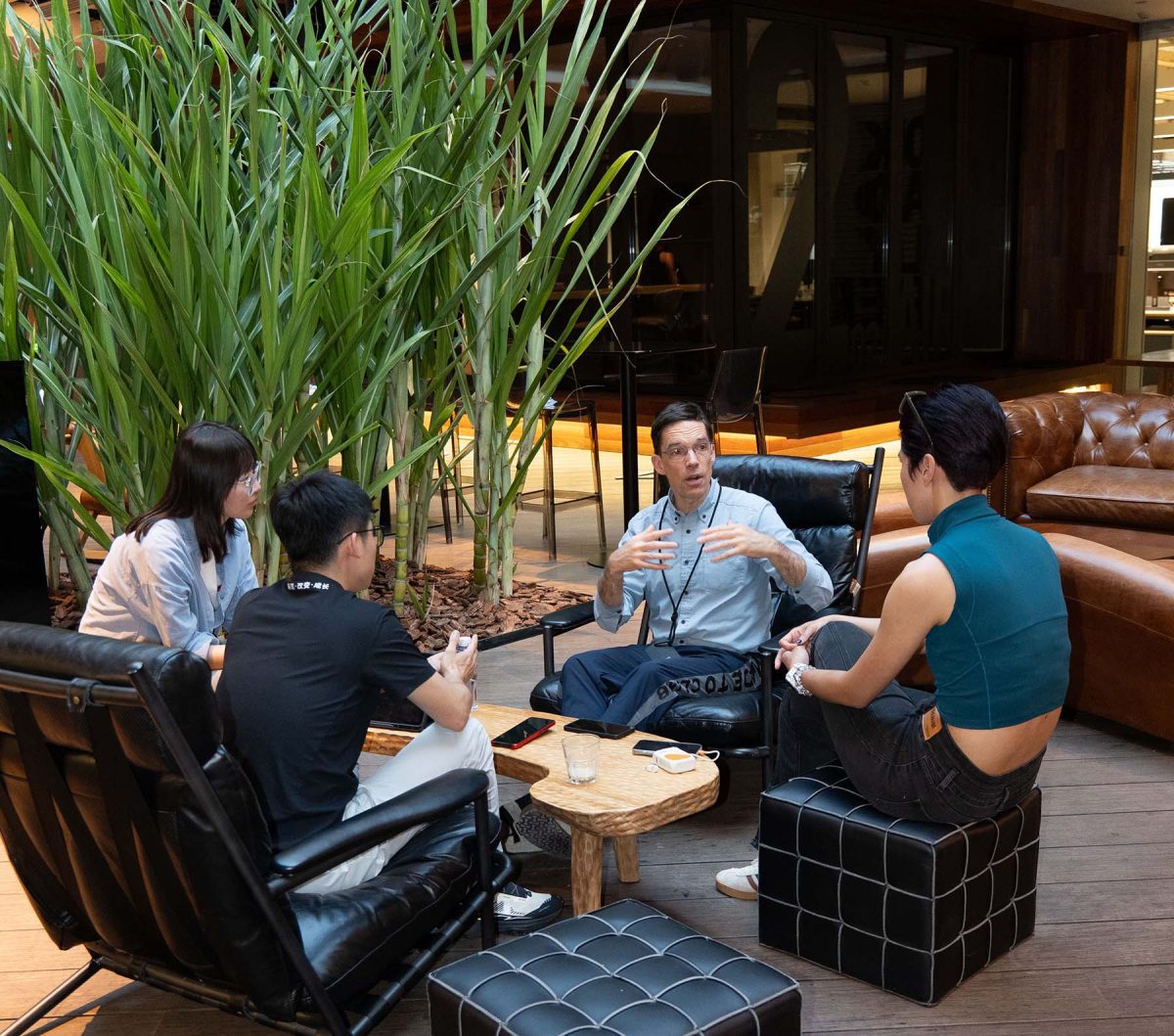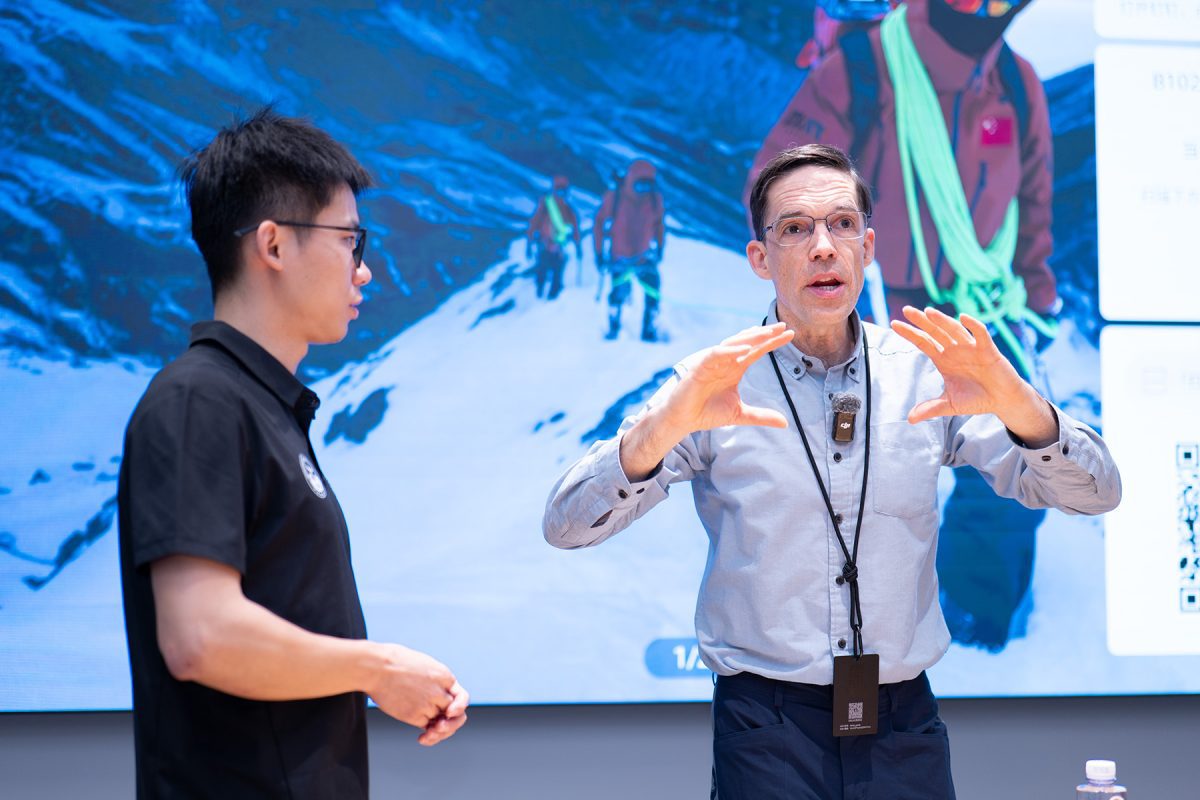
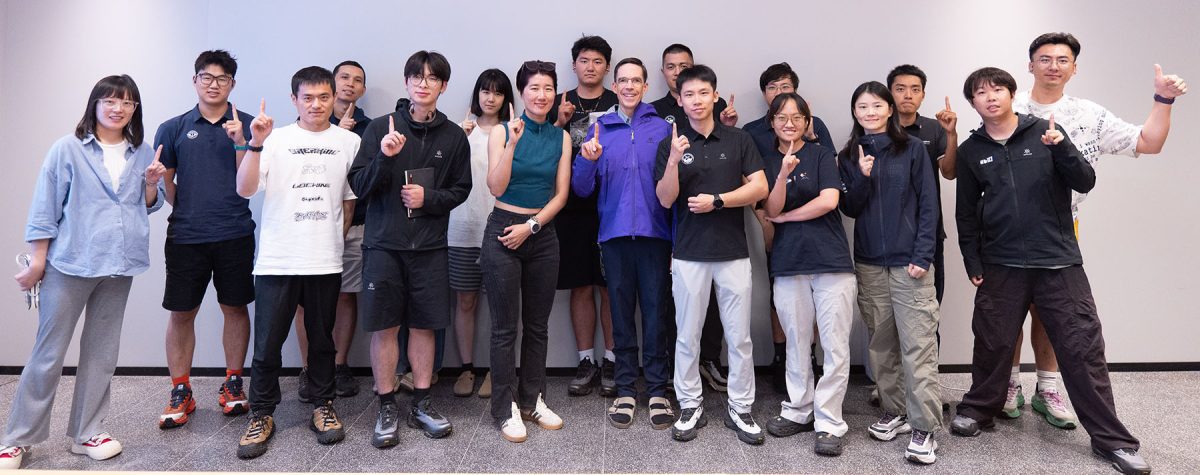
Viristar gave a talk on maturation pathways for the outdoor sector in growing markets like China, to a group of outdoor professionals in Guangzhou, China.
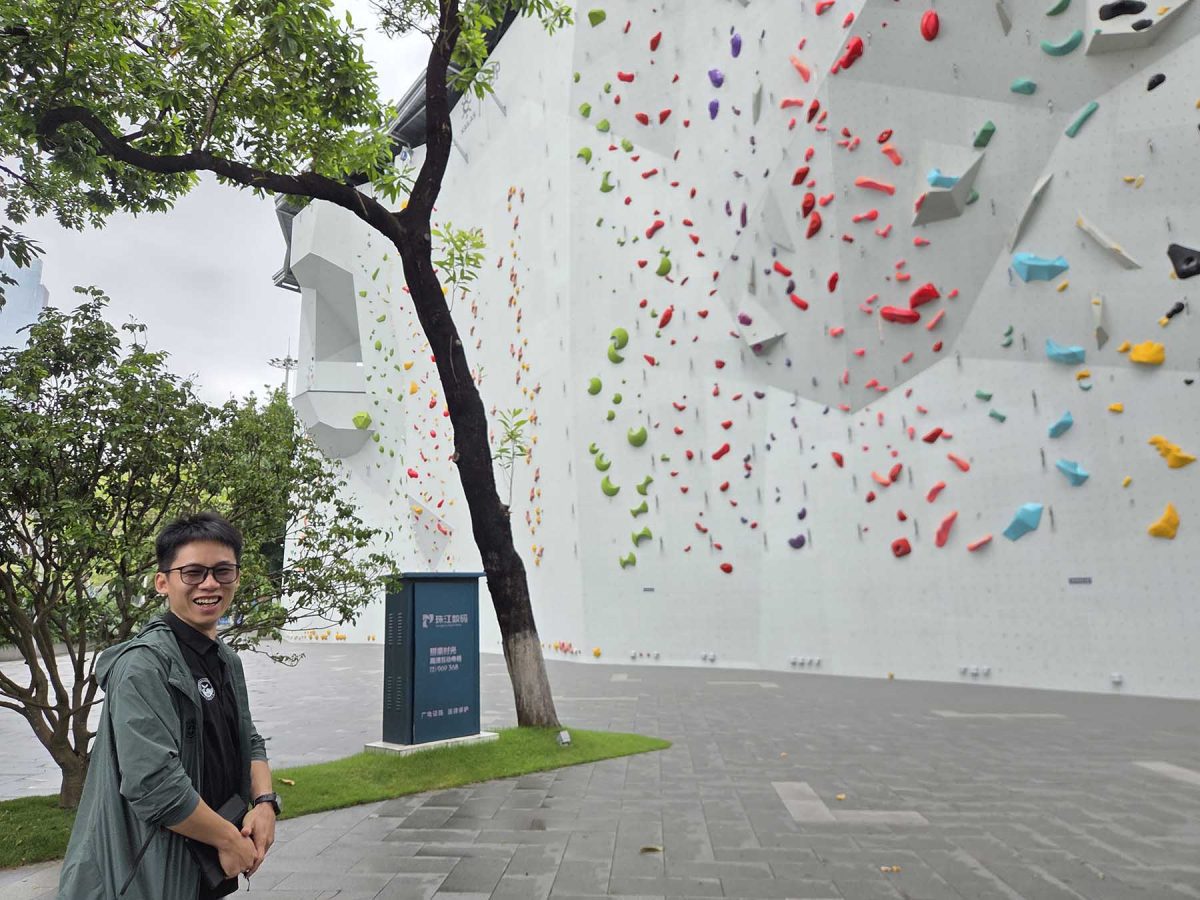
The presentation was hosted by the Guangzhou Leadclimb Outdoor Center, and was held at the Guangzhou headquarters of Kailas, the outdoor sports company that is the parent organization for Leadclimb.
The presentation, held April 29, was given in person to Guangzhou-based Leadclimb Outdoor Center staff, and streamed to other Kailas staff in additional locations.
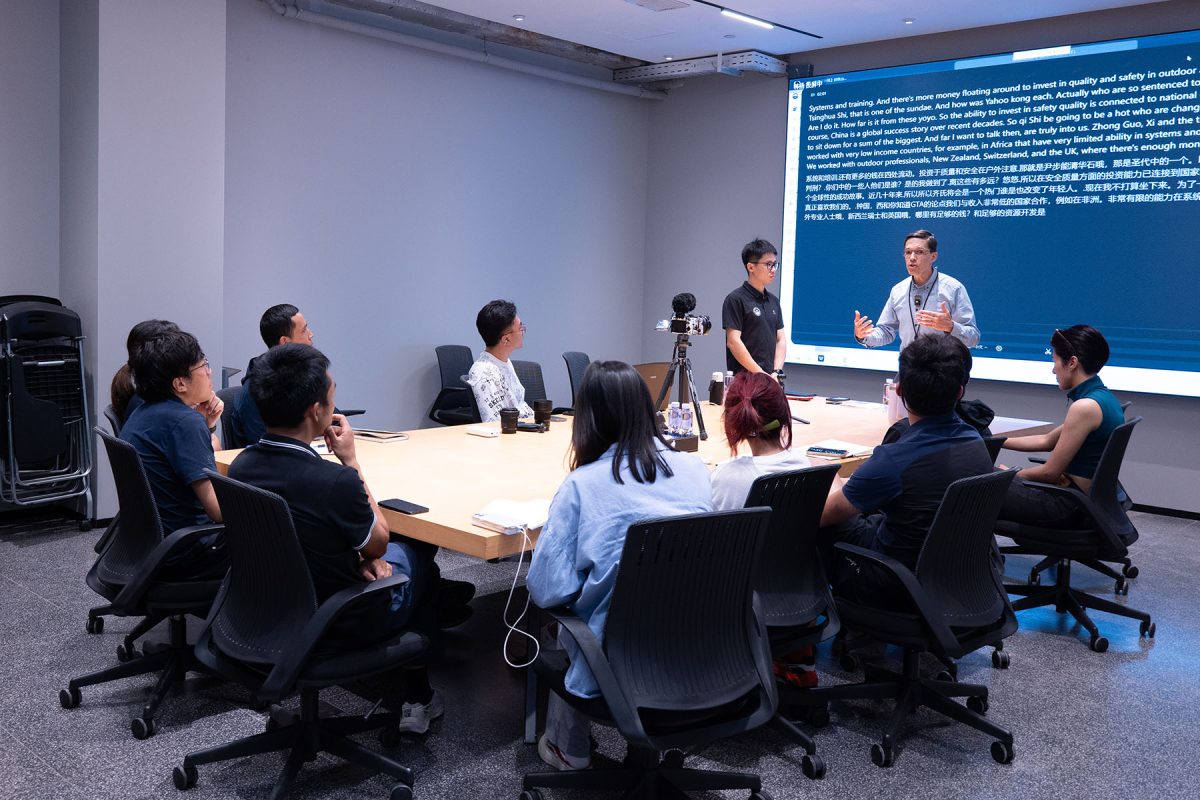
Guangzhou Leadclimb Outdoor Center is a prominent and rapidly growing provider of outdoor education experiences for schools, and outdoor recreation experiences and trainings for individuals across China. The Center invited Viristar to share insights with its team as it seeks to continue providing leadership in advancing the safety, quality and scope of the outdoor adventure industry in China and beyond.
The presentation was held in advance of a two-day Foundations of Adventure Safety course Viristar delivered on the campus of Utahloy International School Guangzhou, a course in which Guangzhou Leadclimb Outdoor Center staff also participated.
Viristar has been working in China since 2018, providing training and consulting services to outdoor education providers, experiential learning programs, adventure tourism organizations, international schools, and others, from Beijing and Shanghai to Hong Kong and Yangshuo. Viristar has also worked with outdoor and adventure professionals in over 85 countries and advised government officials in locations from Europe to Asia on how to develop their outdoor economy, and was pleased to be able to share ideas with leaders in China’s outdoor education and recreation sector.
A description of Viristar’s presentation is below.
Themes: Economic Development, Economic Governance, Sectoral Development
Viristar’s presentation revolved around three themes: (1) economic development, (2) economic governance, and (3) sectoral development within the outdoor industry. This reflects a systems-based perspective, recognizing the role that governments, industry associations, and private sector operators in a given jurisdiction all play in helping the outdoor industry mature.
From a systems-based viewpoint, one can recognize that government bodies, outdoor and adventure associations, and program providers all influence the advancement of the outdoor sector, but none of those three have complete control over the actions of the others.
Economic Development
One of most significant factors influencing the maturation of the outdoor sector in any country is the financial capacity of the private sector and the government to invest in improving the sector, through measures like introducing safety and quality standards, practitioner certifications, training centers, provider accreditation, adventure safety regulation, and good practice guidelines and codes of practice.
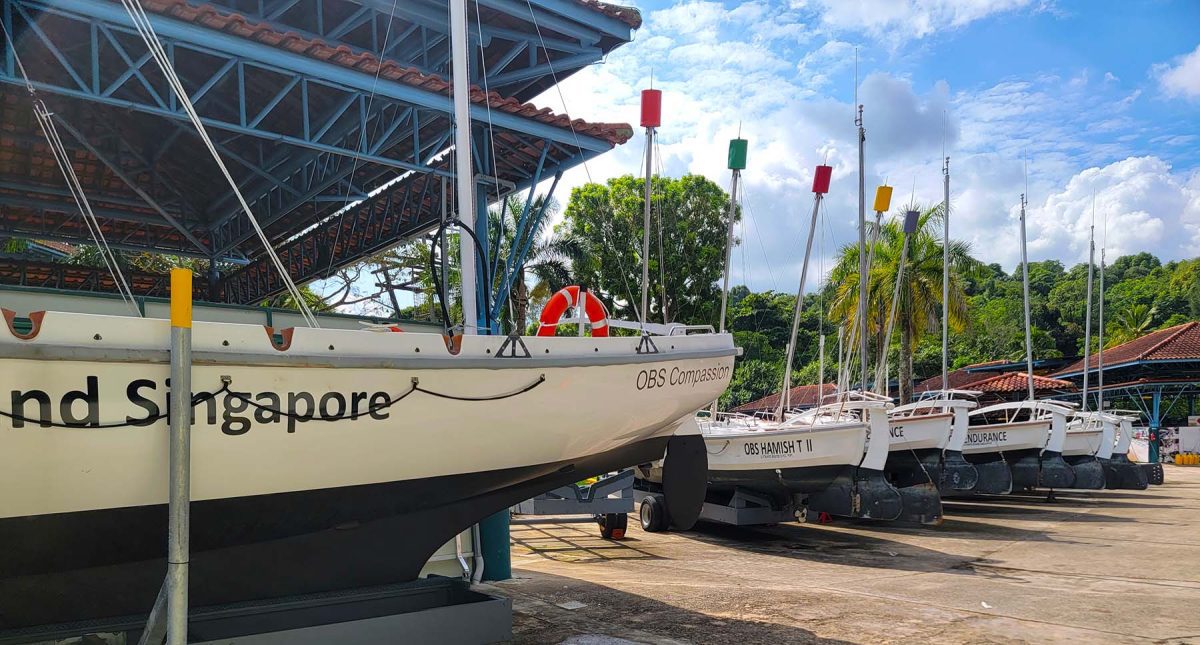
For example, in Singapore, a high-income country (per-capita GDP of 90,674, in 2024 USD), the government pays for every public school student to have three multi-day outdoor education experiences during their grade school career.
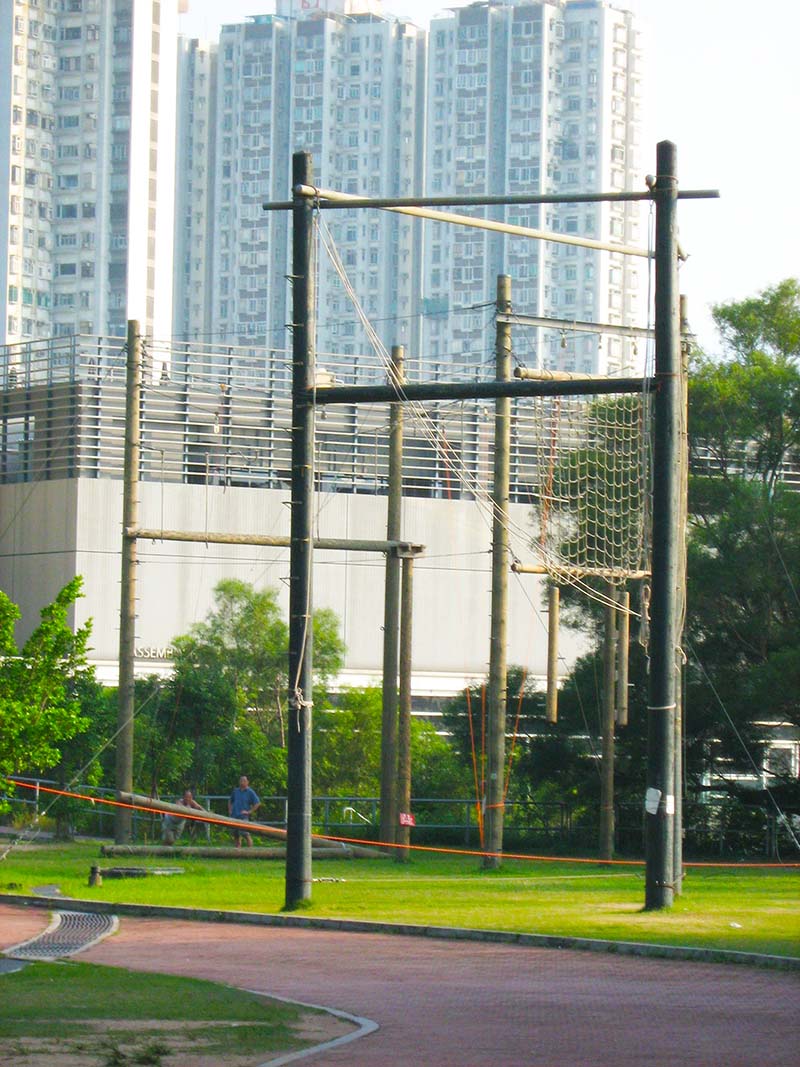
When a serious safety incident occurred on a high ropes challenge course in Singapore, the government instituted rigorous safety regulations for high elements, and collaborated with the private sector to publish an Outdoor Adventure Education Code of Practice with well-developed safety standards covering abseiling, climbing, challenge courses, padding, rowing, rafting, camping and hiking. Conformance with the standards in the Code of Practice is compulsory in many cases (for example, in order to provide outdoor adventure education programs to public schools).
The establishment of these safety requirements—and the ability of outdoor activity providers to meet them—is only feasible when a country or territory, and the institutions within it, have the economic capacity to do so.
China is an upper-middle income country, with a per-capita GDP of 13,303 (in 2024 USD), ranking 82nd out of about 200 countries and territories, according to the World Bank Group. China’s economy is rapidly growing, however, and consequently so is the capacity to invest in developing its outdoor sector.
Economic Governance
The nature of economic governance—at a national and regional level—influences the conditions which enable the private sector to develop high-quality, economically viable outdoor and adventure programs.
Economic governance refers to leadership of the economy, particularly by government authorities, in areas such as legislative and regulatory development, economic policy, anti-corruption measures, international economic cooperation, and the rule of law.
For example, economic development can be enhanced when a country’s approach to governance is such that all persons, institutions and entities, public and private, including the state itself, are accountable to laws that are publicly promulgated, equally enforced and independently adjudicated, and which are consistent with international human rights norms and standards.
In China, anti-corruption and other good governance measures can:
- Protect Chinese businesses by providing a more predictable operating environment
- Enhance international investment by reassuring the global investment community, and
- Reassure consumers such as inbound visitors that they will be protected from ill-treatment
Protection of intellectual property through legislation, regulation, and effective enforcement is also an important element of good economic governance.
And for jurisdictions with the governance capacity to thoughtfully establish well-developed adventure safety regulation in close cooperation with the private sector, and effectively and fairly enforce that regulation, research shows that safety regulation can lead to considerable improvements in safety outcomes, which can improve the reputation and quality of a region’s outdoor adventure sector.

Outdoor adventure safety law and regulation
One element of good economic governance specific to the outdoor sector is safety law and safety regulation specifically for higher-risk (adventure) activities conducted in the out-of-doors.
A number of countries which have been serious about developing their outdoor recreation and education sector have developed adventure safety legislation, or adventure safety regulation, to help ensure that commercially-provided outdoor adventures meet a minimum standard of safety and quality.
This is the case in Switzerland, New Zealand, the UK, Finland, Oman, and in other locations.
Adventure safety regulations are also under consideration in places like Japan, Malaysia and Iceland.
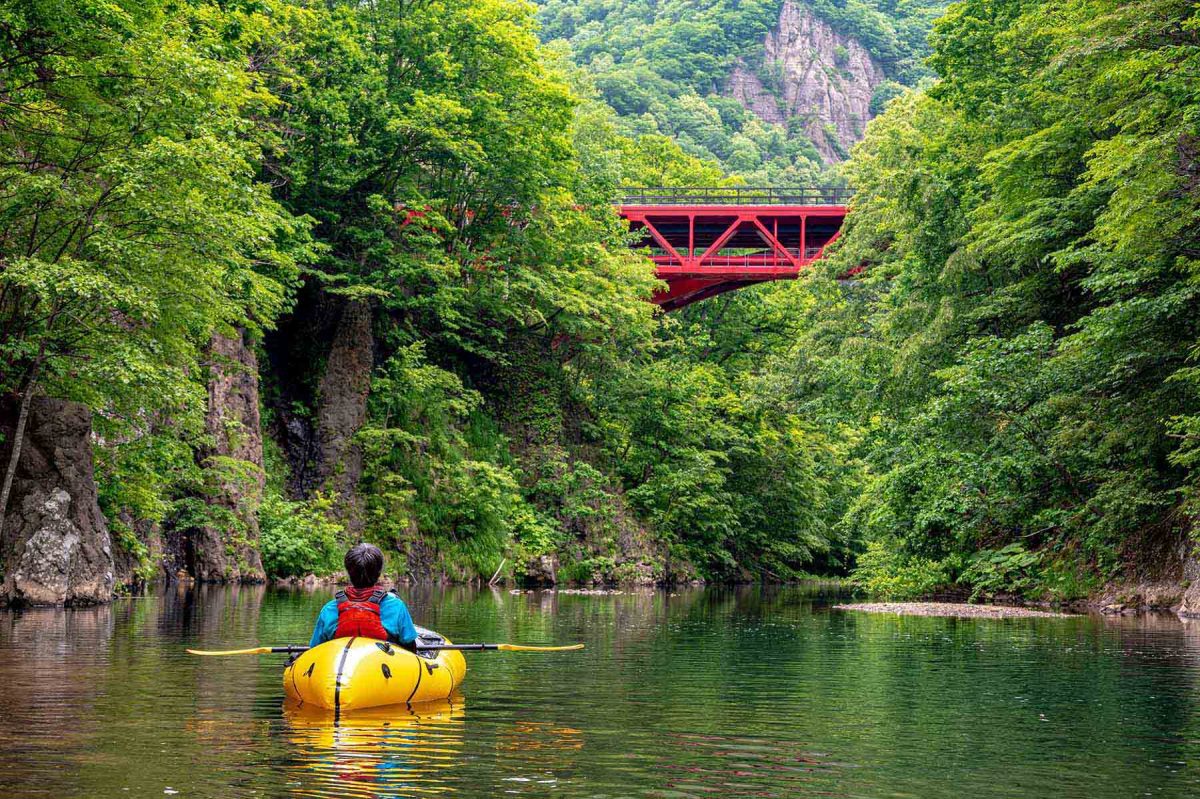
Economic governance case study: adventure safety regulations in the nation of Georgia
Viristar was approached about contributing to an economic governance project in the eastern European nation of Georgia, adjacent Russia and Azerbaijan, through helping develop high-risk (adventure) safety regulations.
The secondary legislation, or technical regulations, would improve the quality and global reputation of Georgia’s adventure tourism sector, and would fall under a revised Law on Tourism recently developed by the Parliamentary Committee of Sector Economy and Economic Policy, and the Georgian National Tourism Administration (GNTA).
Viristar staff traveled to Tbilisi, met with officials from the GNTA and representatives of the mountaineering, rafting, challenge course, ecotourism, snowmobiling, horseback riding, zipline and skiing sectors, and drafted strategic recommendations and a set of safety regulations for the Georgian adventure sector.
Viristar staff developed the regulations keeping in mind the limited capacity of Georgian adventure providers to take on additional regulatory burdens, the capacity of the Georgian government to promulgate and effectively enforce new regulation, and the potential for corruption.
The adventure safety regulations were designed to advance the nation’s outdoor adventure industry, which would bring economic benefits on its own, but which would also help create the legislative and regulatory infrastructure necessary to bring Georgia closer to meeting the requirements needed to enter the European Union, accomplishing which could bring significant additional economic development, security and economic governance benefits.
Sectoral Development
The private sector has a critical role to play in the development of the outdoor industry.
Industry associations that oversee a given sport or activity (known as national governing bodies in the UK, and peak bodies in Australia) and other organizations can develop training systems for individual outdoor leaders, and accreditation programs to support outdoor activity-providing organizations understand and meet good practice standards.
The UK has a well-developed model for this.
In the UK, Sports Councils chartered by the government recognize national governing bodies for specific sports, and as a condition of recognition those NGBs are supposed to implement safety policies.
(In addition, Sport England owns the National Outdoor Centre Plas Y Brenin, a well-established facility where a large number of outdoor skills training courses are held.)
National Governing Bodies include Paddle UK, British Mountaineering Council, British Caving Association, British Cycling, British Dragon Boat Racing Association, British Orienteering, British Rowing, Royal Yachting Association, Snowsport England and many more.
These NGBs then develop qualifications schemes, training courses, or accreditation programs. They also develop guidance documents for adventure and outdoor activities; the documents are known by terms such as:
- Activity standard
- Good practice guideline
- Activity safety guideline
- Code of practice
- Approved code of practice
Examples include good practice guidelines and adventure safety guidelines in New Zealand, the Australian Adventure Activity Standard and related good practice guides, the Approved Code of Practice for adventure activities in the UK, and the Outdoor Adventure Education Code of Practice in Singapore.
Accreditation standards such as the Adventure Safety Accreditation standards from Viristar, and challenge course operator accreditation standards from ACCT International, along with standards from consensus standards development bodies—such as EN 15567 for ropes courses, developed by the European Committee for Standardization (CEN), and relevant standards from the Standardization Administration of China—can also provide similarly valuable guidance.
Organizations that provide outdoor activities can benefit from the training programs, training centers, good practice guidelines, codes of practice, accreditation standards and consensus standards provided by these bodies.
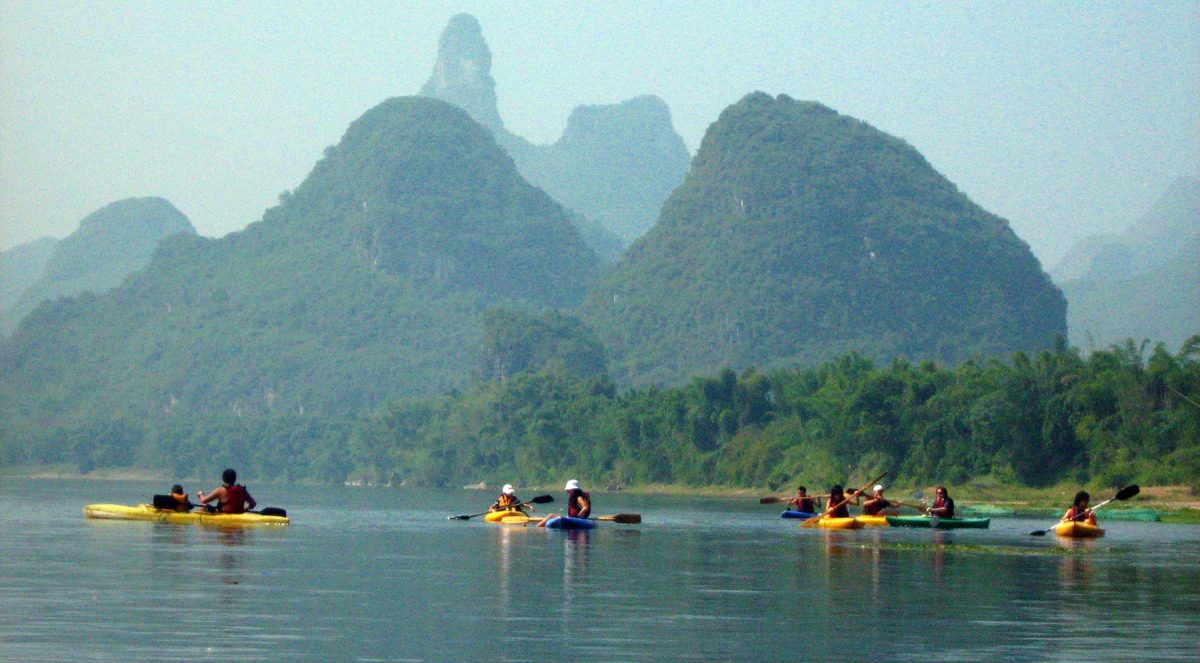
In China, the Chinese Mountaineering Association, Chinese Ski Association, China Hong Kong Mountaineering & Climbing Union and other bodies provide valuable training, certification and safety requirements for the outdoor adventure field, and an increasing number of universities—from Wuhan in central China to major coastal cities—offer well-developed courses of study for the development of capable outdoor professionals.
Recognize the many benefits of outdoor education and recreation
Viristar’s presentation on developing the outdoor sector closed by remarking on the many benefits of outdoor activities—from mental and physical health, to vocational training, fostering environmental appreciation and environmental sustainability, and providing leadership and character development for youth and adults.
A more narrow focus for outdoor sports such as rock climbing on gaining achievements in Olympic sports may limit the many personal and societal benefits of a well-rounded outdoor sector.
In China, where the government is strongly supporting the development of the outdoor sports industry and the outdoor recreation sector, an emphasis on Olympic achievement is balanced with a focus on a broad range of outdoor activities.
Conclusion
China is a country on the move, rapidly developing in almost every area imaginable, with remarkable focus and speed. China already boasts a number of industry bodies, adventure safety requirements, training and certification programs, a vast array of outdoor adventure spaces, and a robust set of operators delivering high-quality outdoor education and recreation experience to Chinese residents and international visitors alike.
Perhaps more than most any country in the world, China is well-situated to continue developing its outdoor industry, with leadership from government officials, guidance from industry associations, and the provision of exciting outdoor adventures by a host of outdoor program providers.